Toddler Activities at Home: A Week of Mornings
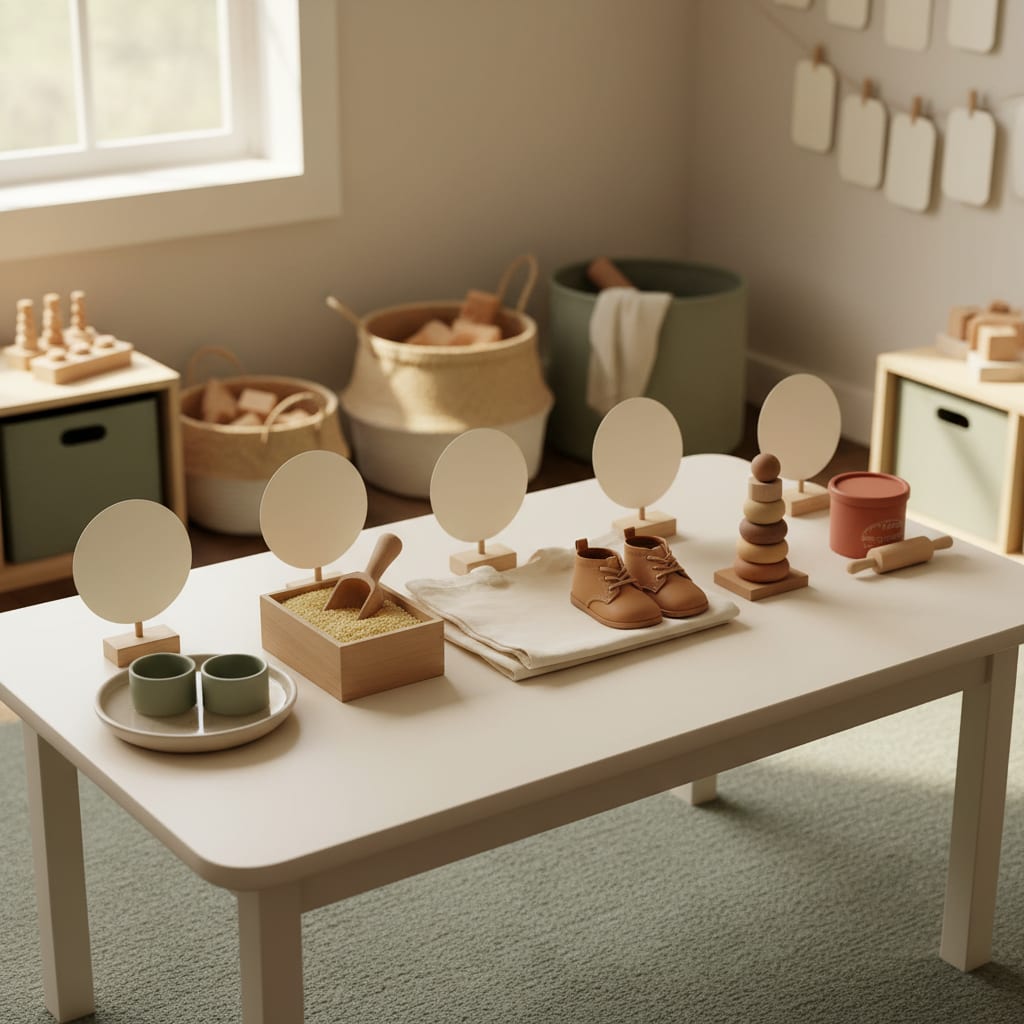
The way to keep toddler activities at home from eating your brain is to stop planning activities and start planning mornings — five of them, on repeat. Give each weekday one standing anchor: water day, bin day, outing day, build day, and a free-for-all Friday. The anchor fills the mid-morning block; warm-up and drift play stay the same every day. You decide the whole week once, your toddler gets the security of a pattern, and 8am stops being an ideas emergency. Here’s the template and the fill-ins.
Why a weekly pattern beats a daily scramble
Every morning you invent from scratch costs you twice: the deciding and the doing. A repeating week deletes the deciding. It’s the same trick as a meal-plan rotation — nobody’s inventing dinner at 5pm, and nobody should be inventing an activity at 8am with a toddler climbing their leg.
There’s a toddler-side payoff too. Kids this age run on anticipation: by the second or third loop through the week, “it’s water day” means something, and an activity they can see coming gets better engagement than a novel one landing cold. Familiar-with-a-twist is the sweet spot of toddler attention, and a weekly rotation manufactures it automatically.
One boundary before the template: this plans the morning block — the day’s big-energy stretch between the breakfast reset and the pre-lunch drift. Where that block sits in your day, and what surrounds it, is the stay-at-home mom schedule’s job; this post just fills its biggest room.
The five-anchor week
Monday: water day. Ease into the week with the highest-return, lowest-creativity anchor there is. Summer: water table, bucket-and-brush “painting” the fence. Winter: an inch of water in a baking dish on a towel, cups, a colander in the sink on a step stool. Water is the anchor you can run on four hours of sleep.
Tuesday: bin day. The sensory bin comes out — and which bin depends on where you are in the rotation system. One bin, presented weekly with a small twist (new scoop, buried animals, a muffin tin), performs for months. Bin day has a hard boundary: bin goes out when interest dies, no mid-morning bin resurrections.
Wednesday: out-the-door day. The midweek morning leaves the house — library storytime, the park, the grocery run with the toddler holding the list. It doesn’t need to be an Instagram outing; the errand is the activity at this age. One standing out-day also quietly protects the other four: home mornings work better when they aren’t seven in a row.
Thursday: build day. Blocks, duplo (something like the LEGO DUPLO Brick Box), couch-cushion construction, the cardboard box that’s been in the garage since Tuesday. Building runs long at every toddler age — stacking at 18 months, castles-with-a-story by three — so this anchor grows with the kid instead of expiring.
Friday: free-for-all day. The pressure valve. Rerun the week’s winner, say yes to the weird request, do the messy thing you dodged all week (paint, play-dough, shaving cream in the bathtub), or declare a pajama morning and read forty books. If a plan flopped earlier in the week, Friday absorbs the retry.
Weekends off-template — family rhythm takes over.
The parts that never change
Around the anchor, keep the same frame every single day: warm-up play after breakfast (play shelf, book basket, the sanctioned tupperware cupboard) while you reset the kitchen, and drift play near your feet before lunch (the low kitchen drawer, muffin-tin transfer games). These two slots run on independent play, not novelty — same-every-day is a feature there, not a bug. The anchor is the only slot that rotates, which is exactly why one idea per day is enough.
If you’re staring down a no-anchor day — sick kid, brutal weather, car in the shop — the stuck-inside plan is the emergency protocol version of this template.
Making it stick (the honest part)
Write the five anchors somewhere visible once — that’s the entire system’s paperwork. Expect the first loop to be mediocre while your toddler learns the pattern; it clicks on repetition. Swap anchors seasonally rather than weekly (water day earns its slot in July and maybe becomes oobleck-in-the-tub day in January). And keep the bar honest: the anchor needs to fill twenty to forty-five minutes of the morning, not all of it. The block has warm-up and drift around it, plus the rest of the roster for topping up. Five decent anchors on repeat beat thirty brilliant ideas you never remember at 8am — that’s the whole bet, and after two years of running it, I’d make it again.
FAQ: toddler activities at home
How do I keep my toddler busy all day at home?
Don’t plan a day of activities — plan a structured day where activities fill one block. A morning anchor (water, bin, outing, building), independent warm-up and drift play around it, quiet time at midday, and low-effort survival play late afternoon covers a whole home day.
What activities can toddlers do at home every day?
The daily constants are the self-serve ones: play-shelf toys on rotation, book baskets, tupperware, the low kitchen drawer, transfer stations. Save the planned setups for one anchor slot per day — dailiness is exactly what makes the constants work.
How many activities does a toddler need per day?
One planned anchor is genuinely enough, surrounded by open-ended free play. Toddlers don’t need a camp schedule; they need one interesting centerpiece and the space to repeat, wander, and get bored on either side of it.
What if my toddler won’t engage with the planned activity?
Give it one relaunch (join for two minutes, add a twist, walk away), then drop it without ceremony and fall back to the constants. Log it mentally for Friday’s retry. A flopped anchor costs you nothing if the frame around it is doing its job.