Easy Toddler Activities for Every Block of the Day
The easiest toddler activities are the ones matched to the right block of the day: big, energy-eating play in the morning when everyone’s fresh; calm, contained activities for quiet time; and lying-down-adjacent options for the 4pm stretch. That matching matters more than the ideas themselves — the same activity that buys you thirty minutes at 9am dies in four minutes at 4pm. So this isn’t a numbered list; it’s my activity roster sorted by when, every entry a fifteen-second setup, organized so that tomorrow morning you’re choosing from four things instead of inventing from zero.
Why “when” beats “what”
Eight years of preschool planning taught me one unglamorous truth: activities don’t fail because they’re bad ideas — they fail because they’re deployed at the wrong energy level. Painting at 4:30pm is a war crime against yourself. The same paint at 9:30am is half an hour of peace. Toddler energy runs on a curve (high morning, cliff at nap, half-power afternoon), and once you sort your activity roster along that curve, the day mostly fills itself.
Which is why this list is organized by the blocks of the five-block home day. If your day doesn’t have blocks yet, start there; activities fill structure — they can’t replace it.
Slow-morning activities (low effort, everyone’s booting up)
The first stretch after breakfast needs warm-up play — things a toddler can start alone while you finish the breakfast reset:
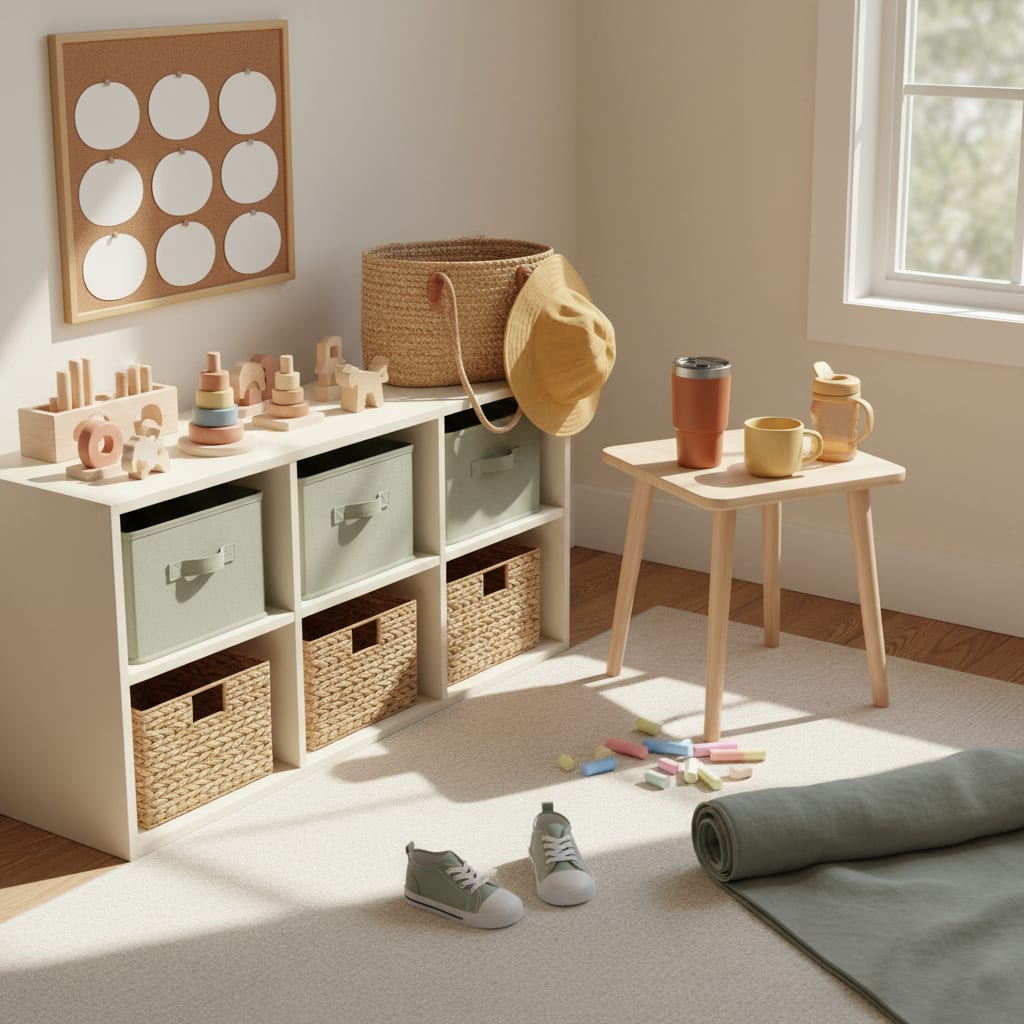
- The play-shelf handoff. A tidy shelf with a few rotated toys is the difference between “go play” working and not. It’s the last link of the morning routine chain for a reason.
- Board books in a basket parked next to wherever the sun hits the floor.
- The tupperware cupboard, officially sanctioned. Nesting, stacking, wearing.
- Stickers on paper — a sheet of dot stickers is ten quiet minutes, seated.
Big-block activities (the energy eaters)
Mid-morning is where the day’s one centerpiece goes — the activities that cost the most and pay the most:
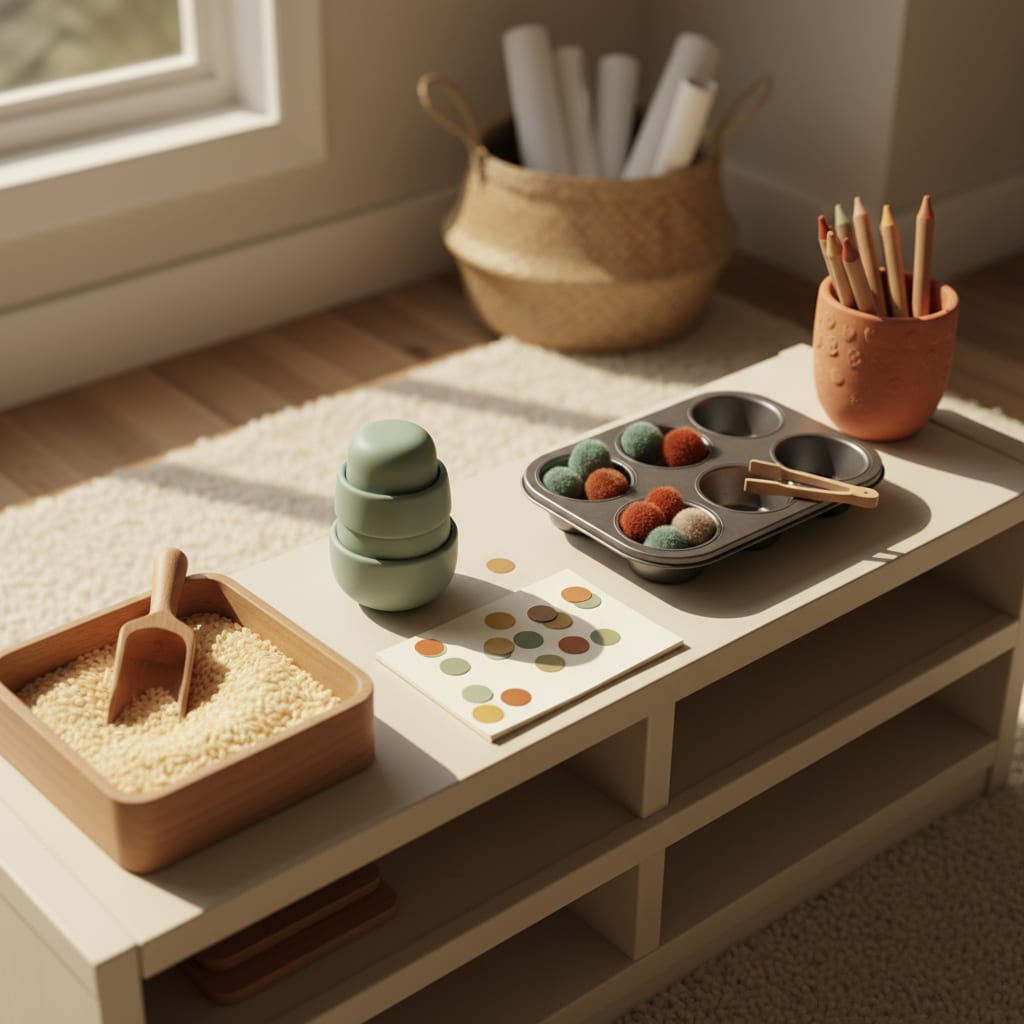
- The sensory bin, obviously — the workhorse of our whole morning. The rotation system is what keeps one tub of rice performing for months.
- Water play, any format. Bin of soapy water plus toy animals plus a brush = the car wash. A paintbrush and a bucket of water “paints” the fence. Cups on a towel for the little ones.
- Anything-but-the-easel painting. Paint the bathtub walls (rinses off), paint paper taped to the sidewalk, paint with water on colored construction paper.
- The obstacle course you narrate into being. Couch cushions, painter’s tape lines, “can you hop to the pillow?” Zero setup, burns real energy, works indoors in any weather.
- Errand-as-outing. The grocery run is an activity at this age — they hold the list, they hunt the bananas. Slower, yes. That’s the point; filling the block is the job.
Pre-lunch drift (buying the last thirty minutes)
The awkward stretch between the centerpiece and lunch wants medium-effort, near-the-kitchen play:
- The kitchen-floor office: a low drawer of safe utensils, muffin tins, and dry pasta to transfer while you make lunch.
- “Wash the vegetables” — a colander, the actual vegetables, a stool at the sink. Lunch prep and activity, same ten minutes.
- Magnet dots on the fridge’s bottom half, or the routine cards getting a dramatic re-reading.
Quiet-time and nap-adjacent activities (calm, contained, solo)
For the midday block — especially for kids who’ve traded the nap for quiet time — the roster is calm, mess-free, and needs zero referee: books, soft animals running a hospital, magnetic drawing pads like the Magna Doodle, chunky puzzles, a busy-basket of quiet fidgets that only appears in this slot. The scarcity is the strategy — quiet-time-only toys stay interesting for months.
The 4pm-stretch roster (survival tier, and proud of it)
Late afternoon activities have one requirement: they must cost you almost nothing, because you have almost nothing.
- The snack picnic. A blanket, a muffin tin with little snacks in the cups. It’s a snack; it’s an activity; it’s twenty minutes.
- The mailbox walk, slow version. Every stick gets inspected. That’s the activity.
- Play-dough at the counter while dinner happens — one can from a Play-Doh 4-pack, one rolling pin, done.
- The dance break. Three songs, everybody’s cooked anyway, might as well be cooked to music.
- Water table or hose in summer — the summer rhythm leans on evening water hard, because wet toddlers are happy toddlers and happy toddlers make it to dinner.
The meta-rule: rotate, don’t accumulate
You don’t need more activities than this — you need these on rotation. Pick two per block, run them for a week or two, swap when they go stale. Familiar-with-a-twist beats novel every single time at this age, and a short roster you know by heart beats a Pinterest board you have to consult at 7am. The goal was never impressive activities; it’s a day that fills itself while you drink the coffee warm-ish.
FAQ: easy toddler activities
What can I do with my toddler all day at home?
Match a short activity roster to your day’s blocks: one big centerpiece in the morning (bin, water play, outing), warm-up and drift play around it, calm solo activities at midday, and survival-tier easy stuff for late afternoon. Structure plus a rotation fills the day; a giant idea list doesn’t.
What are good activities for toddlers with no prep?
The tupperware cupboard, water in any container on a towel, a bucket of water and a paintbrush outside, couch-cushion obstacle courses, snack picnics, and the slow mailbox walk. Everything on this page is a fifteen-second setup on purpose — prep-heavy activities don’t survive real weeks.
How long will a toddler actually play with one activity?
Morning: twenty to forty-five minutes for a good centerpiece, longer as they get older. Late afternoon: five to fifteen minutes from the identical activity — that’s the energy curve, not a failure. Plan more, shorter things after 3pm and don’t take it personally.
How many toys and activities does a toddler really need?
Far fewer than the algorithm suggests: a couple of options per block, rotated every week or two. Toddlers replay familiar activities harder than novel ones — rotation manufactures the novelty. A small roster run well beats a big one run once.