The Cash Envelope System for a One-Income Family
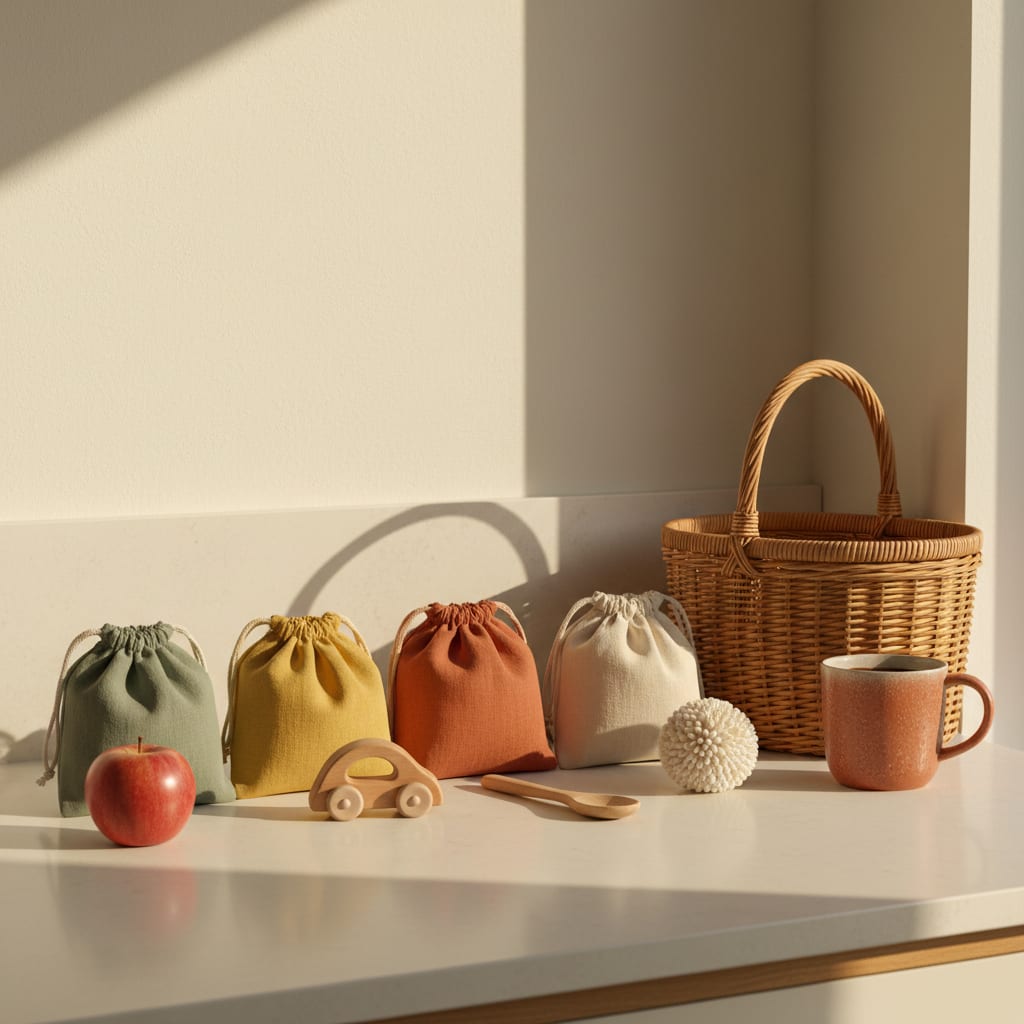
The cash envelope system is simple: on payday you withdraw cash for the spending that changes month to month (groceries, gas, household and kid stuff, a little personal money) and split it into labelled envelopes. When an envelope is empty, that category is done until the next paycheck. On one income, envelopes do one specific job: they cap the variable monthly spending, the part that quietly drifts. They don’t replace sinking funds, which hold the irregular bills that arrive once or twice a year. Envelopes are for this month. Sinking funds are for this year.
Envelopes vs sinking funds: two different jobs
People mix these up because both involve setting money aside in labelled piles. The difference is timing.
- Envelopes hold money you expect to spend down to zero before the next paycheck: this month’s groceries, this month’s gas.
- Sinking funds hold money you expect to build up over months: the car repair, Christmas, the insurance renewal.
If you put Christmas in an envelope, it’ll get borrowed for groceries by the second week. If you put groceries in a sinking fund, you lose the whole point of the envelope, the moment where you look in and see what’s left.
So the two work as a pair. Sinking funds come out of each paycheck first, as a fixed transfer. Envelopes get filled with what’s left for day-to-day life.
Which spending goes in an envelope
Not everything belongs in cash. Bills that are the same every month (rent, insurance, phone, utilities on autopay) stay in the bank. They don’t drift, so they don’t need a cap.
Envelopes are for the categories that do drift. For most one-income families with small kids, that’s four or five:
- Groceries. The big one, and the category where a cap does the most good. My one-income grocery budget covers how to set the number itself.
- Gas. Predictable enough to set, variable enough to creep.
- Household and kids. Diapers, wipes, soap, the birthday-party gift, the replacement sippy cup.
- Fun. Takeout, the zoo trip, the coffee on errand day. Naming it is what stops it hiding inside groceries.
- Personal money, one envelope per adult. A small, no-questions amount each. On one income this matters more than it looks, because it means the parent at home isn’t asking permission for a haircut.
Five is a good ceiling. Every envelope is a decision you revisit monthly, and the system breaks the same way too many sinking funds do: when the upkeep outgrows the benefit.
How to set the amounts
Don’t invent the numbers. Pull the last three months of bank and card statements and add up what you actually spent in each category, then divide by three. That’s your starting amount, not your target.
Then decide, category by category, whether that number is fine or needs to come down. Cut one category at a time, by a modest amount. An envelope set at a number you can’t live on gets “temporarily” topped up from the bank in week two, and then it isn’t an envelope any more.
Check the whole thing against your line-by-line budget: fixed bills plus sinking-fund transfers plus envelopes should equal one paycheck. If it doesn’t, the envelopes are where the adjusting happens, because they’re the only part you control week to week.
Filling them on one paycheck
Fill the envelopes on payday, every payday, before anything else gets spent.
- Paid monthly: fill once, and split groceries into weekly portions inside the envelope (four smaller envelopes, or a paper-clipped stack per week). A monthly grocery envelope with no weekly split tends to be empty by day twenty.
- Paid every two weeks: fill half each payday. Most months have two paychecks, so it maps neatly onto a monthly plan.
Get the cash in the denominations you’ll actually use. A stack of twenties makes small purchases awkward and pushes you toward rounding up.
Running it with kids in the cart
This is where envelopes earn their place in a home-day household, and where the generic advice goes quiet.
Take one envelope, not the wallet. On a grocery run, bring the grocery envelope and leave the card at home, or at least out of reach. The point is that the envelope physically can’t overspend. With a toddler pulling things off shelves and a baby hitting the end of their tolerance, you won’t do mental arithmetic in aisle six. You’ll just know there’s $86 in there.
Shop to the envelope, not to the list. Write the list, add a rough price to each item, and cut it before you leave the house if it’s over. Deciding at home is easier than deciding at the register with a screaming two-year-old.
Give the kids a job with it. Preschoolers love handing cash to a cashier and getting change back, and it’s an early, concrete lesson that money runs out. It also keeps their hands busy.
Use a single errand day. Envelopes pair naturally with the errand-day system: one trip, one envelope per stop.
If loose envelopes keep tearing in the diaper bag, a zippered A6 budget binder like the NICOOTH keeps them flat in one place.
The problems, and the fixes
“So much of our spending is online.” Cash doesn’t work for online orders. Keep the envelope as a ledger instead: when you order diapers online, take that amount out of the household envelope and put it in a separate “online” pocket to deposit later. The cap still works; only the payment method changes.
“We keep borrowing between envelopes.” One borrow a month is life. A pattern means a number is wrong. Move money between envelopes deliberately, at the next payday, not in the middle of the month.
“What happens to leftover money?” Pick a rule in advance. Either it rolls over in the same envelope (good for groceries, which vary) or it goes into a sinking fund (good for fun money). A little left over at the end of the month is the system working.
“Is it safe keeping cash at home?” Keep only one pay period’s envelope money in the house, in one place, and leave everything else in the bank.
FAQ: the cash envelope system
What is the envelope system?
It’s a budgeting method where you divide cash for variable spending (groceries, gas, household, fun) into labelled envelopes each payday and stop spending in a category when its envelope is empty.
What categories should I use for cash envelopes?
Use envelopes only for spending that varies month to month, usually groceries, gas, household and kids’ supplies, fun, and personal money for each adult. Fixed bills stay on autopay from the bank.
Is the cash envelope system the same as sinking funds?
No. Envelopes hold money you plan to spend down within the month. Sinking funds build up over several months for irregular costs like car repairs or Christmas. Most one-income budgets work best using both.
How do I use the envelope system for online shopping?
Treat the envelope as a ledger: subtract the online purchase from the right envelope and set that cash aside to deposit, so the category’s limit still holds.