Teaching Independent Play (So the Morning Runs Itself)
You teach independent play the way you’d teach any other skill: in stages, with the bar set embarrassingly low at first. Start by playing beside your toddler with your hands off the toys. Then narrate from a step away. Then leave for thirty seconds with a cheerful promise to return — and actually return. Stretch the gaps from there. Pair the stages with a setup that makes solo play possible: a safe yes-space, a short rotated shelf, activities that don’t need a referee. Five unbroken minutes is a real win in week one; it grows from there.
Independent play is a skill, not a personality
The most useful thing my preschool years taught me about this: kids who play alone well weren’t born that way, and kids who won’t leave your leg aren’t broken. Independent play is learned, and it’s learned mostly from how the adults around a kid respond — which is genuinely good news, because it means the clingy phase is a starting point, not a verdict.
It’s also the skill underneath every other system on this site. The morning block only “runs itself” if your kid can carry ten or fifteen minutes of it without you; the block-of-the-day activity roster assumes at least some solo capacity. So if the rhythm keeps collapsing because you can’t step away to reset the kitchen, this is the upstream fix.
The build-up method, stage by stage
Stage 1: parallel play, hands off. Sit on the floor with them and do your own quiet thing — fold washcloths, look at your own book — while they play. You’re present but not directing. Resist the urge to teach, suggest, or improve their game. The goal is for play to feel like their project with you nearby, not a service you provide.
Stage 2: narrate from the edge. Move a few feet away — kitchen counter distance — and stay verbally connected. “You’re stacking the cups! The green one’s on top.” You’re proving that your attention doesn’t require your body. Toddlers check in with their eyes constantly at this stage; answer the look with a smile and stay put.
Stage 3: the thirty-second exit. Announce it lightly: “I’m putting this in the laundry — back in a minute.” Leave, come back before they melt down, and make the return boring. No big reunion, no praise avalanche — just “here I am,” and drift back to the edge. The predictability is the whole trick. A kid who trusts that you come back stops monitoring the door.
Stage 4: stretch and disappear on purpose. Lengthen the exits — two minutes, five, ten — always announced, always returned from on time. Somewhere in here, a switch flips: you come back and they don’t look up. Try not to take it personally. That’s the morning starting to run itself.
Move one stage at a time, and expect to slide backwards during teething, illness, new-sibling weeks, and every developmental leap. Backsliding isn’t failure; it’s Tuesday.
The setup half: make solo play physically possible
The stages fail without an environment that supports them, and the environment is three things:
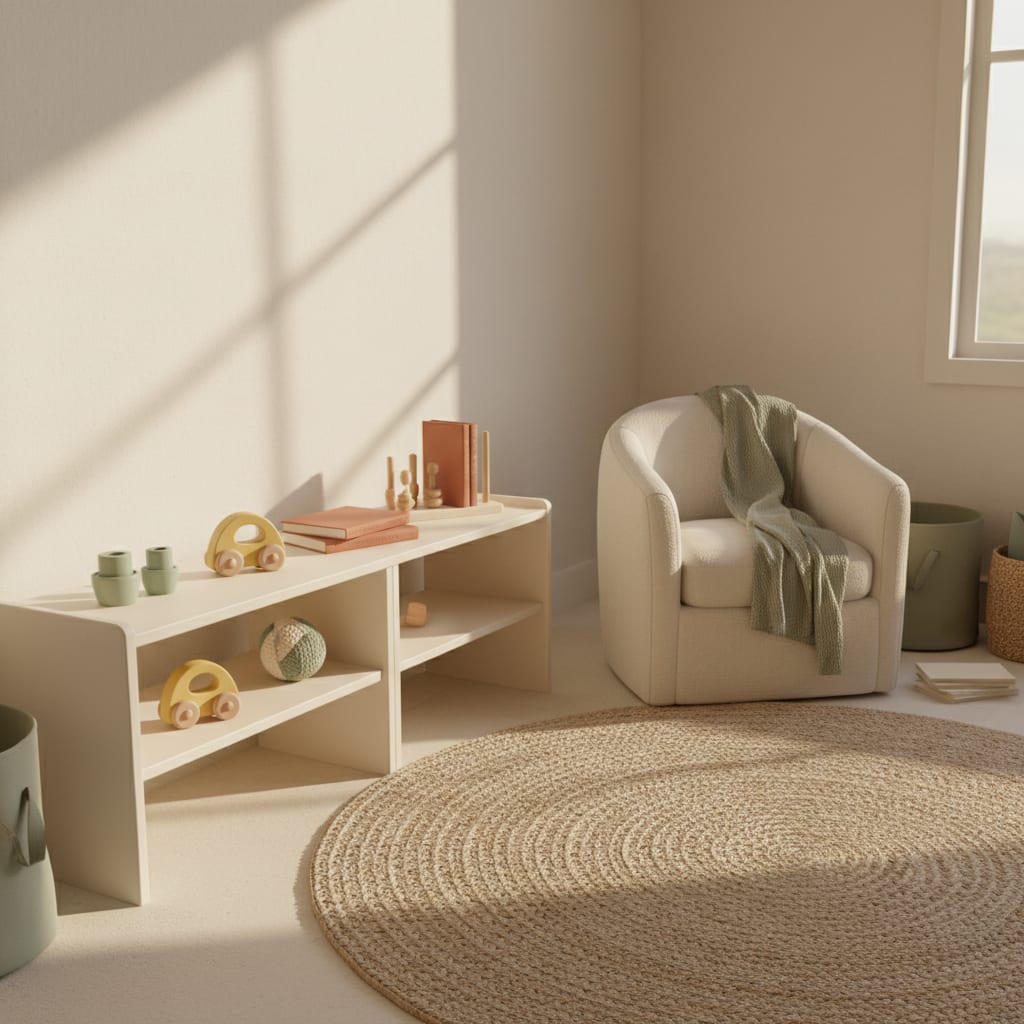
- A yes-space. One area — playroom corner, gated living room — where everything within reach is allowed. If solo play requires you to hover and say “not that,” it isn’t solo play. This is worth an honest crawl-around at kid height.
- A short, rotated shelf. Four to six options visible, everything else stored away. A toddler facing a toy avalanche plays with nothing; a toddler facing five choices picks one. Swap the lineup every week or two — familiar toys come back from the closet like new releases.
- Referee-free activities. For solo blocks, choose play with no failure state and no adult dependency: nesting cups like The First Years Stack & Count, animals and a basket, board books, the sensory bin once your kid is reliably past dumping it. Save anything with rules, steps, or scissors for together-time.
What quietly breaks independent play
Two habits sabotage this without meaning to. The first is interrupting a playing child — swooping in with snacks, questions, or enrichment the moment they’re finally absorbed. Deep play is the thing we’re trying to grow; guard it like a nap. Walk past a busy toddler like you’d walk past a sleeping baby.
The second is using your exit as a sneak-away. Slipping out while they’re distracted feels efficient and teaches exactly the wrong lesson: that you vanish without warning, so they’d better watch you constantly. Announced, boring, reliable exits are slower for a week and faster forever.
Where solo play fits in the day
Don’t deploy independent play at the day’s hardest moments first. Build the skill in the easiest slot — for most toddlers that’s mid-morning, fed and rested — and only then spend it where you need it: the breakfast reset, the lunch-making stretch, the start of the morning block while you finish your coffee. A skill practiced at 9:30am eventually holds up at 4pm. Practiced at 4pm first, it never gets the chance.
FAQ: teaching independent play
At what age can a toddler play independently?
Some solo play is realistic from around a year, in short bursts near you. Expect minutes, not half-hours: a young toddler managing five to ten minutes in a yes-space is doing great, and the capacity grows steadily with age and practice.
How long should a toddler play alone?
Whatever they can genuinely do today, plus a little. Chasing a target number backfires — build from five unbroken minutes and let it stretch. Many preschoolers who’ve practiced can carry twenty to thirty minutes; toddlers, less.
Why won’t my toddler play alone at all?
Usually one of three fixable things: the environment needs you (no yes-space, overwhelming toy pile), the trust isn’t built yet (exits have been sneaky or unpredictable), or the timing’s wrong (tired, hungry, or a clingy developmental phase). Start at stage one and rebuild.
Is it bad to let my toddler play alone?
No — solo play in a safe space with you nearby is widely considered valuable for concentration, confidence, and creativity. It’s not neglect; it’s a skill you’re deliberately handing them. You’re still around, still responsive — just not the entertainment.