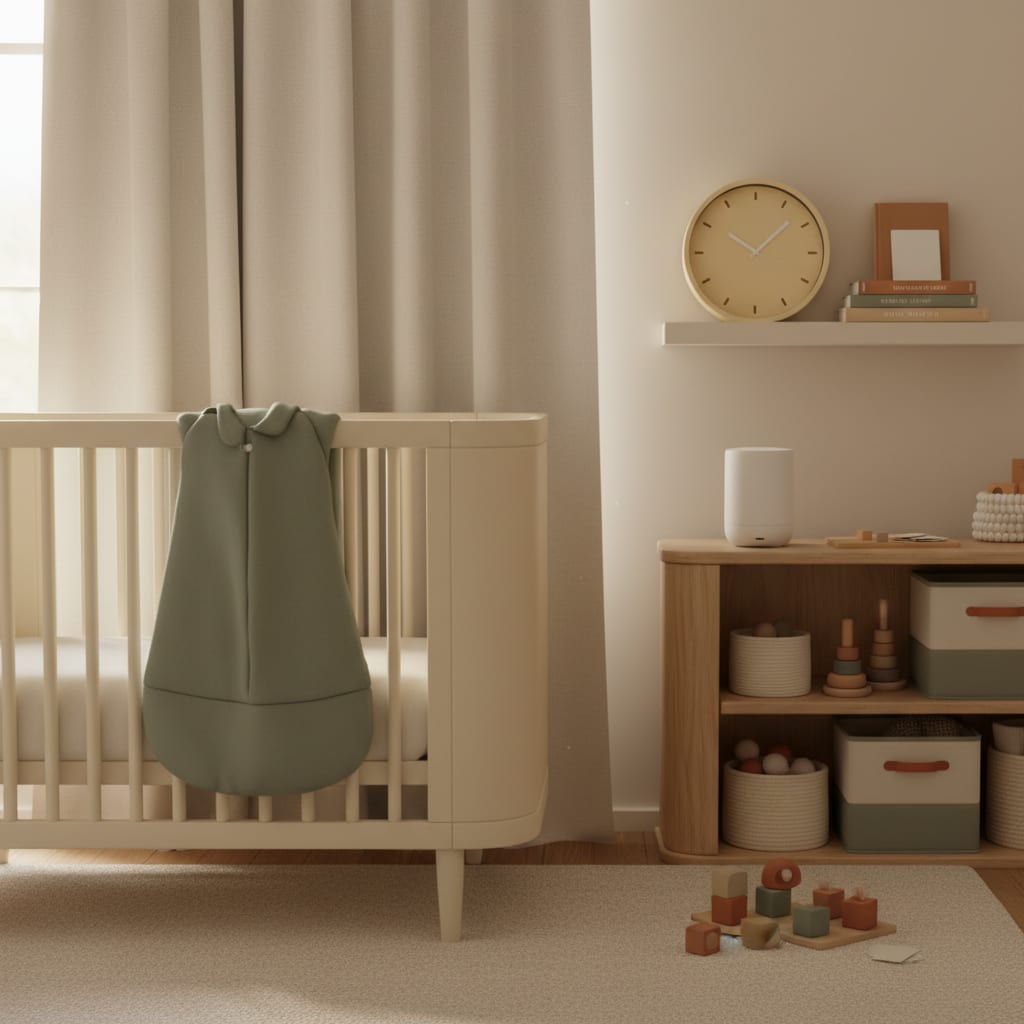
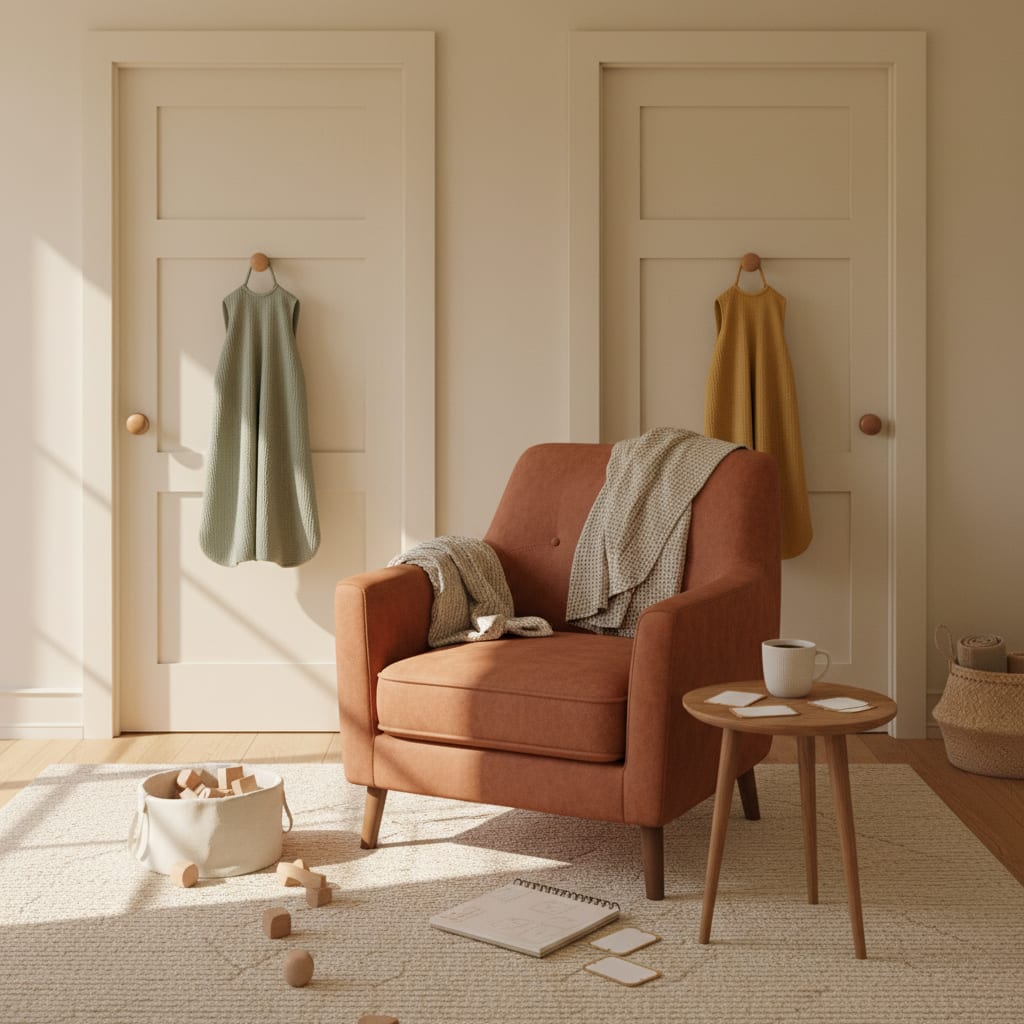
A SAHM Fall Rhythm (When the Days Get Short)
A SAHM fall rhythm keeps the same five blocks and moves the outdoor spending earlier in the day: a slow lamp-lit start, the big block pushed to late morning when it’s finally warm and bright, the nap block untouched, and an indoor anchor waiting for the afternoon because by late October there is no outside left after the nap. The season doesn’t take a block away — it takes the back half of the day’s daylight, which is exactly where a home day was already weakest. Here’s the fall version of our day, and the three systems that keep the short-days stretch from running you.
Fall breaks the afternoon, not the morning
Most fall-routine advice online is written for a house where the kids leave in the morning: back-to-school checklists, homework stations, sports schedules. None of it touches the mom whose kids are home all day and whose real problem is much narrower than “fall.”
Here it is: the afternoon loses its exit. All summer, the block after the nap had a free answer — go outside, it’s light until eight. In September the sun sets a little after seven, in late October a little after six, and once the clocks change it’s gone before five. The 4pm stretch, already the day’s hardest hour, now happens in the dark with no yard option. Meanwhile the mornings get cold and stay dim longer, so the block you could spend outside starts later than it used to.
So the fall adjustment is a single move, repeated in four places: spend the daylight earlier, and pre-decide what fills the dark end. The five-block rhythm itself doesn’t change, exactly as it didn’t in summer. The blocks just get re-aimed at the light instead of the heat.
The fall day, block by block
The slow morning goes back inside (7:00ish–8:30ish). The porch breakfast is over. Fall’s version is a lamp on before anyone’s up, something warm on the table — oatmeal, eggs, cinnamon toast — and a genuinely unhurried hour, because there’s nothing to be outside for yet. One new step earns its place here: getting fully dressed for outside before the morning drifts, shoes included. A toddler already in pants and socks at 8:30 actually gets out at 9:30; one still in pajamas at 9:45 is a morning that quietly became an indoor day.
The big block moves later and still goes outside (9:30ish–11:30ish). This is the fall change that matters most. Summer’s outside window was the coolest hour of the day; fall’s is the warmest and brightest, which is mid-to-late morning. Push the outing or the yard time into that slot on purpose and take it in almost any weather short of rain and real cold: leaf piles, puddle stomping, acorn collecting, a stroller loop, the park with nobody else in it. On the first frost mornings, flip the block’s halves — indoor centerpiece first while the sun works on the yard, outside from 10:30. What you’re protecting is the principle that the day’s movement happens before lunch, because after the nap there may be no daylight left to spend.
The midday block is the one thing fall leaves alone (11:30ish–3:00ish). Lunch, then the nap ramp, unchanged and unnegotiable — same order, same length, same room. One caution and one gift. An early-dark room is not automatically a sleepier room by November; if the nap starts sliding, the cause is almost always the wake window, not the season. And a dim, cold house at one in the afternoon is genuinely good nap weather, which the season hands you for free.
The afternoon needs a pre-decided anchor (3:00ish–5:00ish). In September you can still send everyone out after the nap and let the yard do the work. By mid-October that stops, and this is the block where a fall day falls apart if nobody planned it. Decide the anchor at the start of the week, not at 3:15 with a whining toddler: one indoor centerpiece per weekday afternoon, rotated so it never has to be invented — bath-in-the-afternoon day, a big-motor setup like couch cushions and a Pacific Play Tents crawl tunnel, something they can stir, a movement-video day, a standby from the indoor roster. The other half is light: turn on every lamp before the nap ends, so nobody wakes into a grey house. It sounds trivial. It changes the whole block.
The runway starts on the clock, not the sky (5:00ish–7:30ish). Dark at five makes a house feel like it’s eight, and the honest risk is a bedtime that drifts earlier every week through October until you have a 5am waker. Set the runway by the clock you used in August — dinner, bath, books, bed, same chain, same order — and let the windows be dark. The clock change in early November takes the same principle: keep the order fixed, shift the times gradually if at all, and let the room’s darkness do the signalling instead of the sky’s.
What actually changes, month by month
Fall isn’t one season for a home day; it’s three, and pretending otherwise is why the rhythm feels wrong by Halloween.
- September. Nearly a summer day with cooler edges; outside still works after the nap. This is the month to build the afternoon rotation while you don’t need it — a system installed under pressure never sticks.
- October. The real transition. The after-nap outside block goes away, the gear at the door doubles, and the afternoon anchor starts carrying the day. Expect the first genuinely long indoor stretch and don’t read it as a rhythm failure.
- November. Short days, cold, and the clock change. Everything is front-loaded now: daylight spent before lunch, the afternoon fully indoor, the runway entirely lamp-lit. This is the month the three systems below do all the work.
Three systems that carry the short days
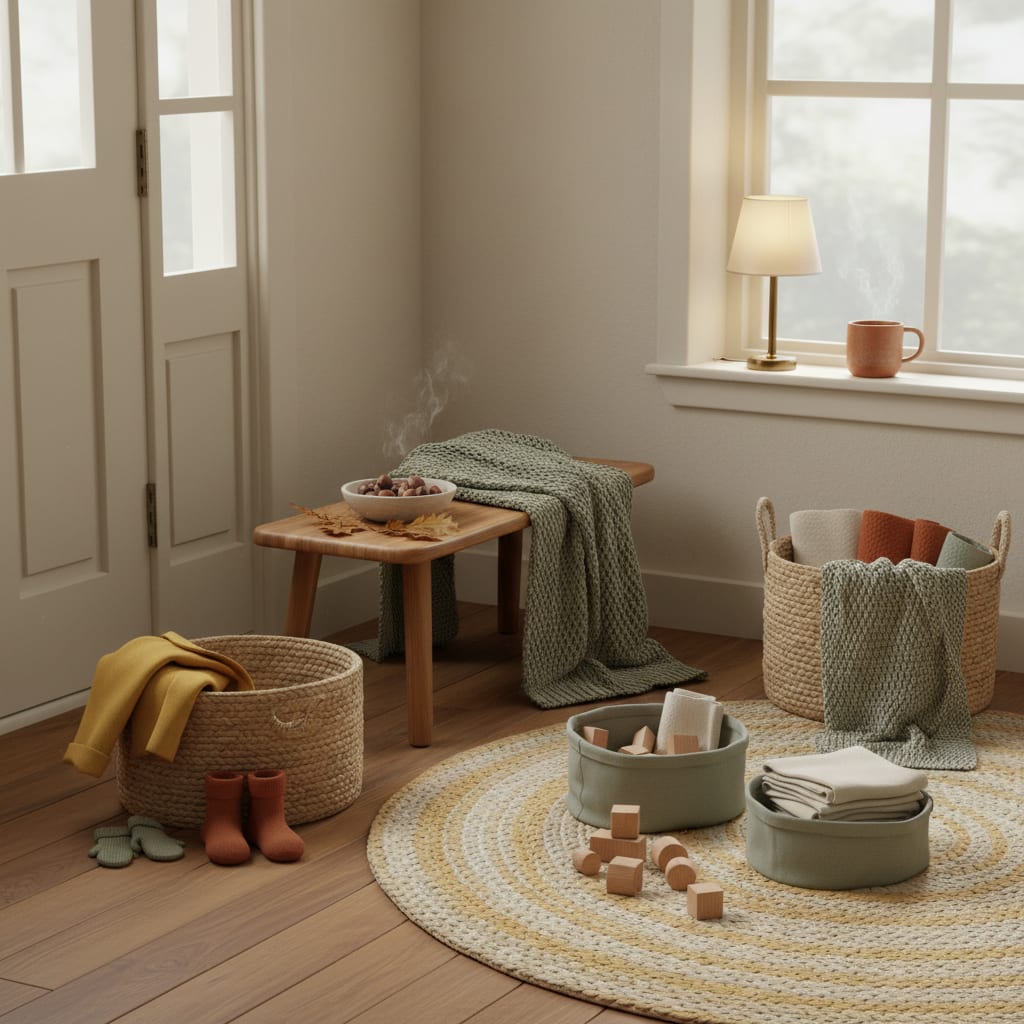
The door station. Fall’s real tax isn’t the cold, it’s the fifteen minutes of hunting for one mitten that turns a yes into a no. One low basket or hooks at toddler height, holding exactly what this week needs: coat, hat, mittens, boots, spare socks. When the gear lives at the door the late-morning block starts itself; when it lives in three rooms, the outing dies at the threshold.
The light plan. Decide once which lamps come on and when — one before wake-up on dark mornings, the living-room set before the nap ends, the low warm ones at the start of the runway. A house whose light steps down deliberately in the evening reads as bedtime coming, instead of just getting gloomy.
The rotation refresh. Summer’s indoor toys have been ignored for three months, which is a gift: rotate the bins in late September and novelty arrives free, right as the indoor blocks start expanding. Bring the water play in too — a warm-water bin at the sink with cups and a whisk buys a twenty-minute October afternoon the way the hose did in July.
FAQ: fall rhythms for stay-at-home moms
What does a fall routine look like for a toddler at home all day?
Same five blocks as any home day, re-aimed at the light: a slow indoor breakfast, outside during the warm bright late-morning window, lunch and nap through midday, one pre-decided indoor anchor after the nap, then the usual dinner-bath-books-bed runway on a fixed clock.
How do I fill the afternoon when it’s dark by five?
Pre-decide it. Assign each weekday afternoon one indoor centerpiece and rotate the five, so you’re never inventing an activity at 3:15. Turn the lamps on before the nap ends, and keep one big-motor option in the rotation so the movement the yard used to provide still happens somewhere.
Should bedtime move earlier when the days get shorter?
Not because of the sky. Early darkness makes a house feel later than it is, and a bedtime that creeps earlier all autumn usually buys you an earlier wake-up rather than more sleep. Keep the runway on the clock and let the room’s darkness, not the window’s, do the signalling.
My toddler refuses to go outside once it’s cold. Is skipping it fine?
A few days, sure. As a pattern it costs you, because the pre-lunch movement block is what makes the nap and the late afternoon work. Lower the bar instead of dropping the block: ten minutes on the step, a walk to the mailbox and back, or a full-warmth alternative like an indoor obstacle course on the genuinely brutal days.