The 4pm Stretch: A Plan for the Day's Hardest Hour
The 4pm stretch — the hour or two between the end of the nap and dinner — is the hardest part of a home day because it’s the only block with no structure built into it and no reserves left on either side. The fix isn’t more patience. It’s deciding at 3:45, before anything has gone wrong, what fills the block: one movement outlet, one contained setup, a real snack early, and a dinner that doesn’t need this hour. Plan the hardest hour like you plan the morning, and it stops being the hour that decides how you feel about the whole day.
Why this hour is structurally bad
Every other block of a home day has a job — breakfast, the outing, the nap, bedtime. The pre-dinner stretch has no job except get to dinner, which is not a plan; it’s a countdown. That’s the first problem.
The second is that both of you are running on empty at the same time. Your toddler has burned through the nap’s fresh start and is heading down the back half of their wake window; you’ve been on since six, because the nap was when you did the things you can’t do with them awake. And the tasks stacked into this window — cooking, a partner arriving, the start of the bedtime ramp — are the day’s most demanding.
Third, and most fixable: by four o’clock most homes have a toy floor that’s been degrading since breakfast, under fading light. A room that was inviting at nine reads as visual chaos at four, which affects a two-year-old more than we credit.
None of that is a discipline problem. It’s a design problem, and design problems have design fixes.
The 3:45 pivot
The highest-leverage habit here is starting the block before the block starts. At around 3:45 — or fifteen minutes after they’re properly awake, whatever the clock says — do four things that take five minutes total:
- Reset the floor. Not a clean-up. One basket, one lap of the room, everything in it, done. A cleared floor buys real cooperation, because it changes what the room suggests doing.
- Put out the snack. Not a hand-it-over snack; a set-down-at-the-table one, with protein and fat in it.
- Open the door. Front, back, garage. Air and light change the register of a room even if nobody goes outside.
- Decide the setup. One. The one you already know works. Don’t shop for ideas at 4:10 with a kid on your leg; that’s the moment the phone wins.
The pivot works because it puts you in front of the hour instead of behind it. Once you’re reacting, the hour has already got you.
Four things that actually hold the block
You need a small, boring rotation you can run without thinking. My four:
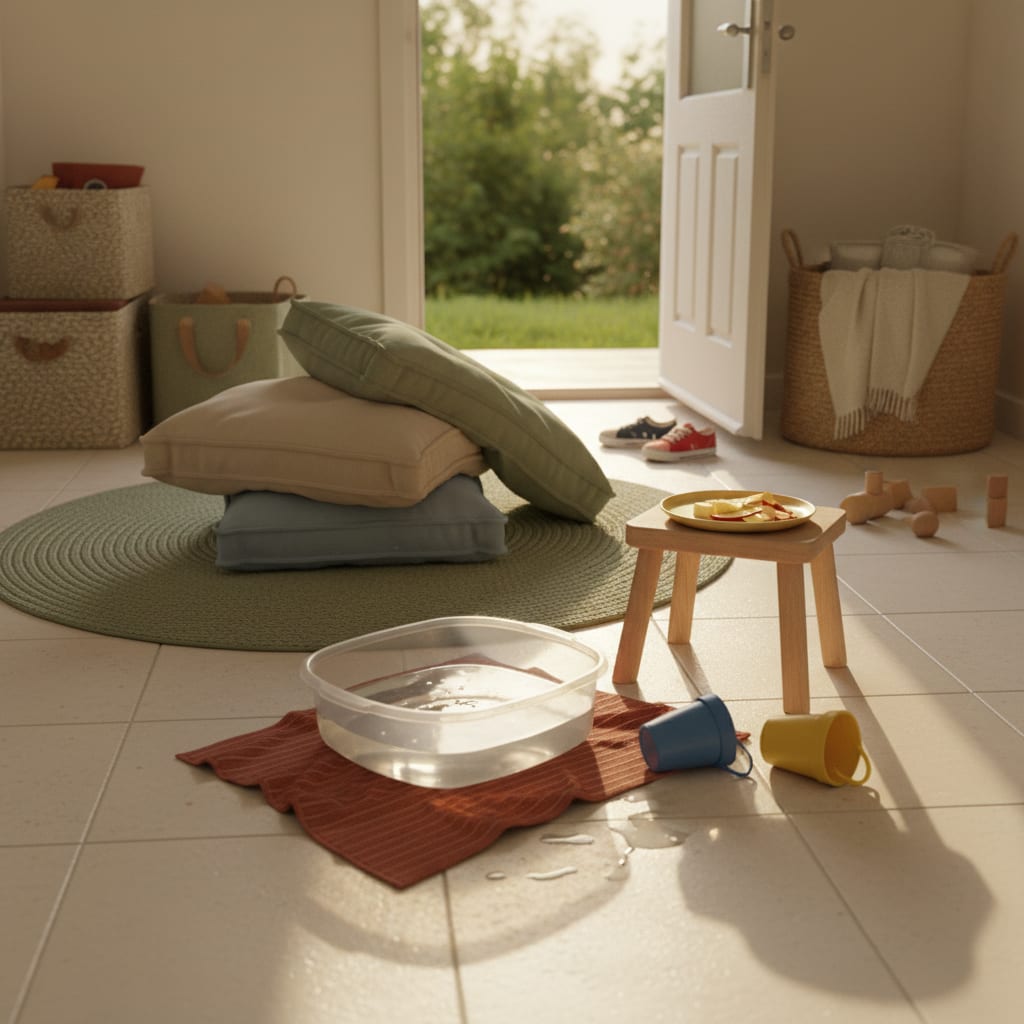
Water, in some form. A sink of warm water and a few cups, a dish tub on a towel, the bath an hour early, the hose on the grass. Water is the most reliable attention-holder in the toddler world and the most annoying to set up — which is why it lives at 4pm, not at 9am when you have better options.
Big-body movement. Not “go play” — a specific physical thing. Couch cushions on the floor, a crawl-under course made from two chairs and a blanket, ten minutes of driveway scootering. Late-day meltdowns are very often unspent energy plus low blood sugar, and this half addresses the first.
A contained table setup. Playdough, a tray of dry beans and scoops, stickers, a muffin tin and pom-poms. Something with edges that lives in a bin and comes out only in this block, which is what keeps it interesting. If you run a play shelf on rotation, pull the pre-dinner setup from the same system so you’re not inventing it fresh each afternoon.
The kitchen job. Washing three potatoes in a bowl. Tearing lettuce. Stirring something cold. It’s slower than doing it yourself and it’s the only way anything gets done at this hour. My three-year-old washing the same four carrots repeatedly has bought me many dinners.
Two per week is plenty — this is a rotation, not a curriculum. Keep the four or five setups that survive contact with 4pm and forget the rest.
The snack is doing more work than you think
A lot of what we call the witching hour is a small person who last ate at noon. Feed them at 3:30 or 4:00, before the descent, sitting down — cheese, yogurt, nut butter on toast, eggs. A carbohydrate-only snack eaten standing in the doorway buys about eleven minutes.
The common objection is that it wrecks dinner. Honestly: sometimes. A four o’clock snack means a lighter dinner at six, and I’d rather have a pleasant hour and a kid who eats two-thirds of dinner than a grim hour and a kid too far gone to eat anyway. If it genuinely collides, move the snack earlier rather than shrinking it.
Make dinner not need this hour
This is the structural fix, and it’s worth more than any activity. If dinner has to be cooked between 4:30 and 5:30, you’re doing skilled work in the worst conditions of the day.
Pick a system: prep components at naptime, cook double every second night so half the week reheats, or slow-cook in the morning when everyone is reasonable. Same principle as grocery planning that removes decisions — fewer choices at the moment you can least make them.
If none of that happened today, the fallback is a fed family, not a cooked meal. Scrambled eggs and fruit is dinner. Nobody at my table has ever noticed.
When it’s already collapsed
Some afternoons the plan doesn’t survive first contact. The escalation ladder, in order:
- Go outside. Even for six minutes, even in bad weather, even in pajamas. It resets both of you more reliably than anything indoors.
- Change the water temperature. Early bath. It’s a legitimate strategy, not a defeat, and it pulls a whole bedtime step forward.
- Put music on loudly and stop talking. Sound changes a room faster than words do, and by this hour your voice is a stressor for both of you.
- Take the screen. Twenty minutes of something calm while you cook is a tool, and using it on the third bad day running doesn’t mean you’ve lost.
If the whole day has been like this — not just the hour — that’s a different problem, and there’s a mid-day circuit-breaker worth running before you get anywhere near four o’clock.
The part that isn’t about the toddler
This hour hits hard partly because it’s when the loneliness of a home day arrives: the light drops, the house is loud, nobody has spoken to you in adult sentences since morning, and the hardest ninety minutes are still ahead. Naming that helped me more than any activity did. It also made me protect one thing — a standing text thread, a call to my sister while I cook, a neighbor’s driveway at five. Late-afternoon adult contact isn’t an add-on to the plan; some days it is the plan.
FAQ: surviving the pre-dinner hour with toddlers
Why is 4pm to 6pm so hard with toddlers?
It puts the day’s lowest energy on both sides against its highest logistical demand, in the one block with no built-in structure. Add a long stretch since real food and a room degrading since breakfast, and the difficulty is situational rather than behavioral.
What is the witching hour, and how long does it last?
It’s the fussy late-afternoon stretch most families notice from infancy onward, though it changes shape as kids grow. In the toddler years it’s usually shorter than it feels — roughly sixty to ninety minutes — and it responds well to food, movement, and a change of environment.
Should I let my toddler watch TV before dinner?
Using a short show to get dinner cooked is a reasonable trade, and it works best as a defined block with a clear end rather than an open-ended default. If you’re reaching for it every afternoon, the thing to change is usually the dinner plan, not the screen.
How do I stop the 4pm meltdown before it starts?
Move first. A sit-down snack around 3:30, a floor reset, and one physical outlet before the whining begins prevent more meltdowns than any response after the fact. The hour is easier to shape than to rescue.