A SAHM Day With a 3 Year Old (When Naps Get Wobbly)
A SAHM day with a 3 year old keeps the same five-block rhythm as the toddler years — slow morning, big block, midday anchor, low-key afternoon, bedtime runway — with one big change: the nap gets wobbly. Some days she sleeps, some days she doesn’t, and the fix is making the midday block about the break, not the sleep: nap when it comes, quiet time when it doesn’t, same slot either way. Here’s our actual day with my daughter at three, block by block, including the part nobody warns you about — three-year-old opinions are two-year-old opinions with better vocabulary.
What changes at three (and what doesn’t)
The blocks don’t change; the five-block order has been the same since she was one. What changes is the texture inside them. At three she can genuinely play independently for real stretches, hold a two-step instruction, and help with actual jobs — and simultaneously she has a lawyer’s appetite for negotiation and a dying nap. The day gets easier and trickier at the same time. Both are true, which is basically the motto of this whole gig.
The slow morning (6:45ish–8:15ish)
Up around 6:45 — three-year-olds sleep marginally later, one of the age’s underrated gifts. Milk, couch, breakfast, same chain as always, except now she runs most of it: gets her own cup, “makes” her toast, feeds the imaginary cat. The morning battles of two have mostly faded, not because she got agreeable but because the routine got older than her memory. It’s just how mornings go, as far as she knows.
The big block (8:15ish–11:45ish)
Three and a half hours of the day’s best energy, and at three it finally stretches to fit. The one-centerpiece rule still holds — park, errand-outing, water play, a bin with a storyline — but the drift around the centerpiece got so much richer. This is the age of the twenty-minute setup payoff: a pretend kitchen “restaurant,” a construction site in the sandbox, animals lined up for school. My whole roster of block-fillers, sorted by what fits where, is in easy toddler activities for every block; at three, the big-block section of that list finally earns its keep.
What I actually do during her deep-play stretches: the visible chores, near her, narrating nothing. She plays harder when I’m boringly busy than when I hover.
Lunch and the wobbly middle (11:45ish–2:00ish)
Lunch at 11:45ish, then the day’s coin flip. At three, our nap pattern went: sleeps three or four days a week, fights it the others, and desperately needs the downtime either way. The trap is treating no-sleep days as broken days. They’re not — the block still happens.
- Nap days: the usual ramp — potty, curtains, books, down by 12:30ish, up around 2.
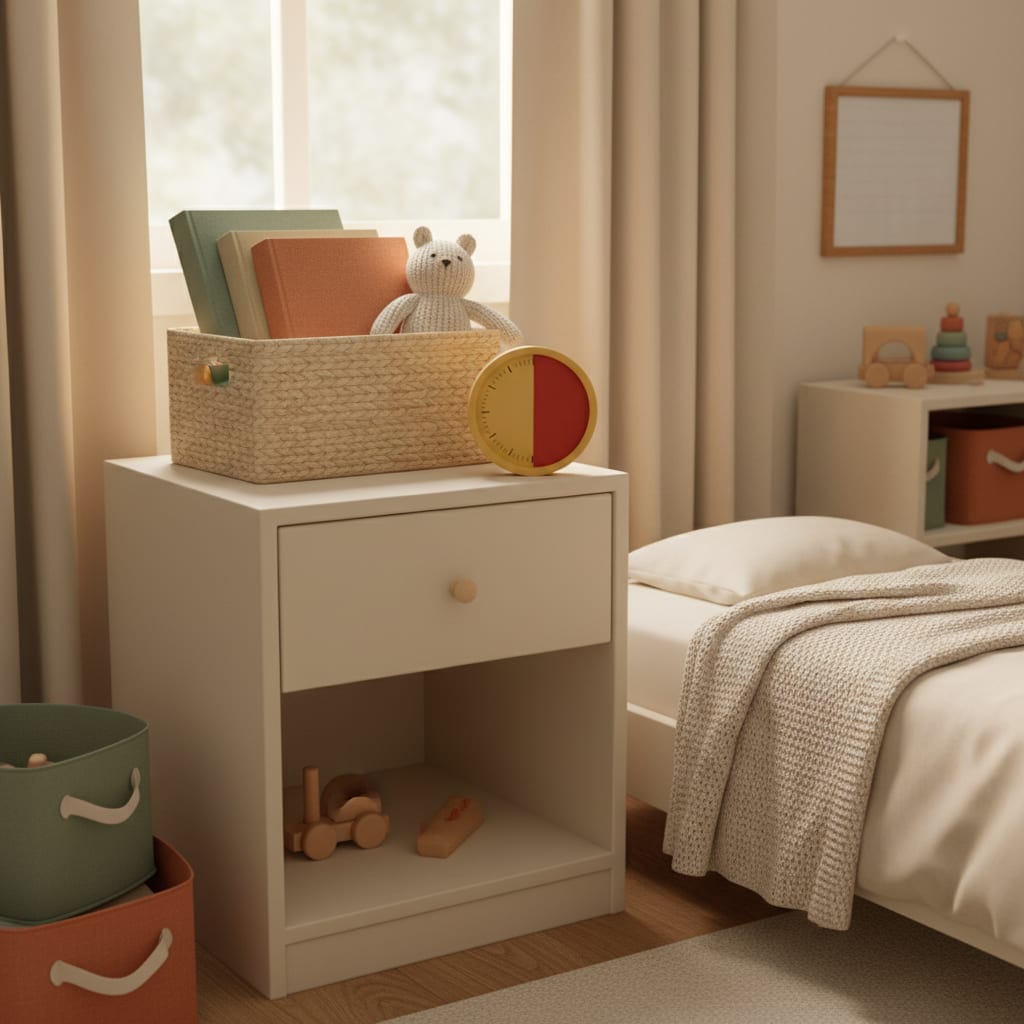
- No-nap days: same ramp, but it ends in quiet time — in her room with books and soft toys, door ajar, timer on. She rests, I still get my block.
The mechanics of making quiet time actually work — the training weeks, the timer, what’s allowed in the room — get their own post: quiet time, what to do when naps end. Short version: it’s a skill you teach in the same slot the nap lived in, and it saves the entire rhythm when the nap goes.
One flag: if the nap dies at three, that’s on schedule. If it’s dying alongside a 5am wake-up or hour-long bedtimes, that’s usually a sleep-pressure problem, not a personality one — worth fixing upstream before redesigning your day around it.
The low-key afternoon (2:00ish–5:00ish)
Whoever emerges from the midday block — napped or merely rested — gets a snack immediately, then the standard half-power afternoon: backyard, a walk, play-dough at the counter, “helping” with dinner prep, which at three is occasionally actual help. The 4pm stretch is still the day’s hardest hour, though it’s softer than it was at two. On no-nap days I move bedtime earlier and feel zero guilt about it.
The runway (5:00ish–7:30ish)
Dinner, bath, books, bed. At three the runway gained a negotiation phase — one more book, different pajamas, water with the other cup — and the answer that works is the boring one: the chain is the chain. She can pick the books; she can’t pick whether books happen. Down by 7:30, earlier on no-nap days, and she’s usually out fast — a three-year-old who skipped her nap is running on fumes by seven no matter how loudly she denied being tired.
FAQ: SAHM days with a 3 year old
Do 3 year olds still need a nap?
Many still nap at least some days, and the range is wide — some kids nap daily past four, some are done before three. What every three-year-old still needs is a midday break. Keep the block and let the sleep be optional: nap when it comes, quiet time when it doesn’t.
What does quiet time look like for a 3 year old?
The same slot the nap lived in: their room, a basket of books and soft toys, a timer they can see or hear, parent nearby but not entertaining. Most kids build up to forty-five minutes or more with a couple weeks of practice. It’s a taught skill, not a temperament lottery.
How is a day with a 3 year old different from a 2 year old?
Longer independent-play stretches, real conversations, actual helping — and in exchange, a wobbly nap and champion-level negotiation. The block structure stays identical; you’ll just find the big block finally fits everything you used to try to cram into it.
Should I drop the nap to fix bedtime battles?
Sometimes — a three-year-old who naps two hours may genuinely not be tired at 7:30, and capping or dropping the nap fixes it. But try the boring fixes first (earlier nap, shorter nap, consistent chain) before giving up the midday sleep entirely; you’ll miss it when it’s gone.