How to Protect the Nap: A SAHM Schedule That Holds
A nap-anchored home day doesn’t hold because you wrote a good schedule. It holds because you defend one specific hour of the day against everything that would eat it — errands that run long, a five-minute drowse in the car seat, a morning with nothing in it, a bedtime that crept later all week. Protecting the nap is a set of constraints you accept, not a routine you follow, and it’s the part most sample schedules leave out. Here are the five protections that actually keep the anchor in place, and the honest accounting of what each one costs.
Why protection, not planning, is the job
Every schedule post — including mine — shows you a day with a nap in the middle of it. Fine. But the block structure is downstream of a single question: does the nap reliably happen, at roughly the same time, for roughly the same length? If yes, everything else in the day arranges itself around it. If no, you don’t have a rhythm; you have a hopeful list.
The architecture of building the blocks around the sleep is its own post. This one is about the fence you put around the anchor once you’ve got it — because the anchor doesn’t wander off on its own. It gets taken, usually by something small and reasonable-seeming that happened three hours earlier.
The five protections
1. Load the morning on purpose
The most common cause of a bad nap is a morning that had nothing in it. A kid who has been indoors, under low light, doing low-movement things until 11am has not accumulated the tiredness the nap needs. Light exposure early and real physical movement — outside if at all possible, and it usually is for at least ten minutes — are not enrichment. They’re nap inputs.
The practical rule I run: something outdoors before 10am, most days, even if it’s the driveway. The morning block is doing sleep work whether or not it looks like it.
2. Set an outing curfew
Here’s the one that changes home days most. Nothing goes on the calendar that ends within about forty-five minutes of nap start. Not “we’ll be back by 12:15 and nap at 12:30” — that plan has never once worked in this house.
The reason is transition time. Coming home, coats off, shoes off, snack, wind-down, and then sleep is not a five-minute process for a small kid whose system is still revved from being out. Compress it and you get a fight, a late start, and a short nap. So the curfew is real: morning events end by mid-morning, or the day is a no-nap-quality day and I plan the afternoon accordingly instead of pretending.
What it costs: a genuinely narrower calendar. Story time at 11:15 is off the table for a season. That is the trade, and it’s worth naming honestly rather than pretending nap-anchored days are compatible with everything.
3. Pay attention to the car-nap tax
A ten-minute doze in the car seat at 11:40 is not a bonus. It takes the edge off the sleep pressure that the real nap needed, and it can cost you the entire afternoon block — a forty-minute nap instead of two hours, or none at all. The same is true of a stroller doze on the way home.
So: schedule driving away from the pre-nap window when you can, and when you can’t, accept that you’ve spent the nap and adjust. Windows down, conversation, snack, whatever keeps them awake for the last ten minutes of the drive. It feels absurd to fight a sleeping baby out of sleep. The arithmetic still works out in your favor.
4. Run the same ramp, in the same order
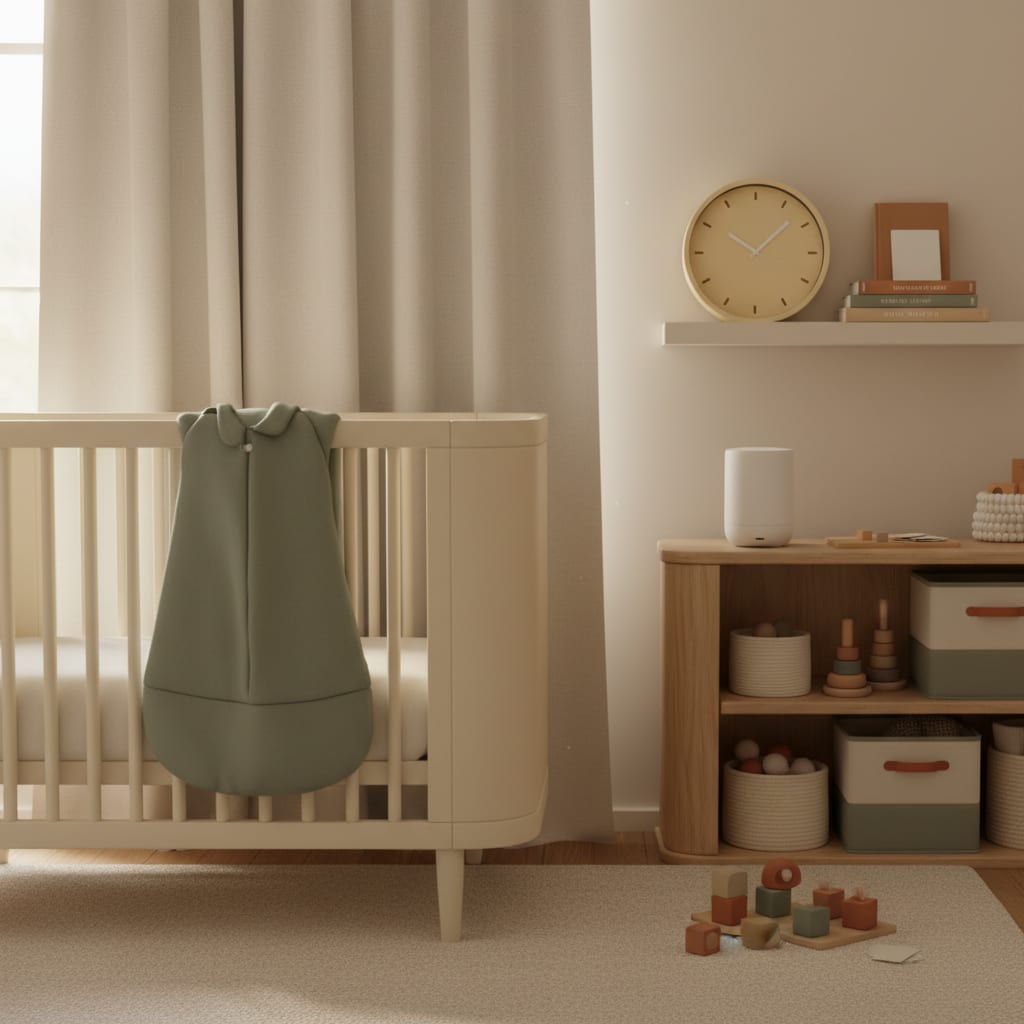
The nap doesn’t start when they go in the crib. It starts when the ramp starts — the same fifteen-minute sequence, same order, every day. Ours is: snack finished, diaper, one book, curtains, sound machine, in. The order matters more than the content, because the sequence itself is the signal.
Two environmental pieces do the heavy lifting inside that ramp: darkness, and continuous sound. A real sound machine placed across the room — the durable standard is a Yogasleep Dohm — runs at a steady volume all the way through the nap, which matters because it masks the doorbell and the sibling at exactly the moment a sleep cycle ends. A phone app that times out at thirty minutes stops working precisely when it’s needed. If naps end at the forty-five-minute mark like clockwork, the room is often the culprit, and it’s a cheaper fix than a schedule overhaul. More on that pattern in why thirty-minute naps happen, and Betteroo’s guide covers the usual causes of short naps in more depth.
5. Aim at the window, not the clock
The nap goes where the wake window says, not where yesterday’s clock says. A kid who woke at 5:50 does not nap at the same time as a kid who woke at 7:10, and forcing the clock produces either an overtired fight or a bed-refusal. The wake windows cheat sheet covers the general ranges; the skill is reading your own kid’s drift off them.
Two structural details that make the window easier to hit. Order the block as awake-time, then food, then sleep — the eat-play-sleep loop exists precisely so that feeding doesn’t become the thing that puts them down. And keep the last thirty minutes before the ramp deliberately low-stimulation: no new toys, no screens, no visitors, nothing that spikes them right as you’re trying to bring them down.

What protecting the nap costs
I’d rather say this plainly than sell you a frictionless version. A protected nap costs you a narrower calendar for a season or two — fewer late-morning activities, fewer lunch dates, a lot of “we can’t, that’s naptime” said to people who find it excessive. It costs some spontaneity. It occasionally costs you the good weather window on a nice day.
What you get back is a home day with a fixed point in it: a block you can plan work, rest, or a second kid’s quiet time into, a kid who is not overtired by 4pm, and a bedtime that isn’t a two-hour negotiation. In a season where almost nothing is predictable, buying one predictable hour is a good trade. It just isn’t a free one.
When the protection fails anyway
Because it will, a couple of times a week. The rules for a blown nap:
- Salvage, don’t rebuild. A short nap means an earlier bedtime tonight, not a redesigned schedule. Move bedtime up by twenty to thirty minutes and stop there.
- Lower the afternoon. Cancel the ambitious thing. Water, outside, snack early. This is the afternoon to spend, not the afternoon to achieve.
- Don’t chase a second nap late. Past mid-afternoon, a rescue nap usually costs you the night. Ride it out, go to bed early.
- Count the pattern, not the day. One blown nap is nothing. Four in a row is a signal — usually a wake window that’s outgrown, a room that’s too light, or a transition arriving.
FAQ: protecting a toddler’s nap
How do I stop errands from wrecking naptime?
Set a curfew rather than a target: nothing scheduled that ends within about forty-five minutes of nap start. The transition home — coats, snack, wind-down — takes longer than people plan for, and compressing it is what turns a good nap into a short one.
Does a car nap really ruin the real nap?
Often, yes. Even ten minutes of sleep releases enough sleep pressure to shorten or cancel the nap that follows. If a drive falls in the pre-nap window, it’s usually worth actively keeping them awake for the last stretch, then running the normal ramp at home.
What’s the ideal pre-nap routine length?
Around ten to fifteen minutes, run in the same order every day. Consistency of sequence matters more than what’s in it — the routine works as a signal, and a signal only works if it’s identical each time.
Should I wake a toddler from a long nap to protect bedtime?
Sometimes. If the nap regularly runs so long that bedtime is being pushed late or bedtime resistance has appeared, capping the nap is the gentler fix — and a much better first move than dropping the nap entirely.