A SAHM Day With an 18 Month Old (Two-Nap Reality)
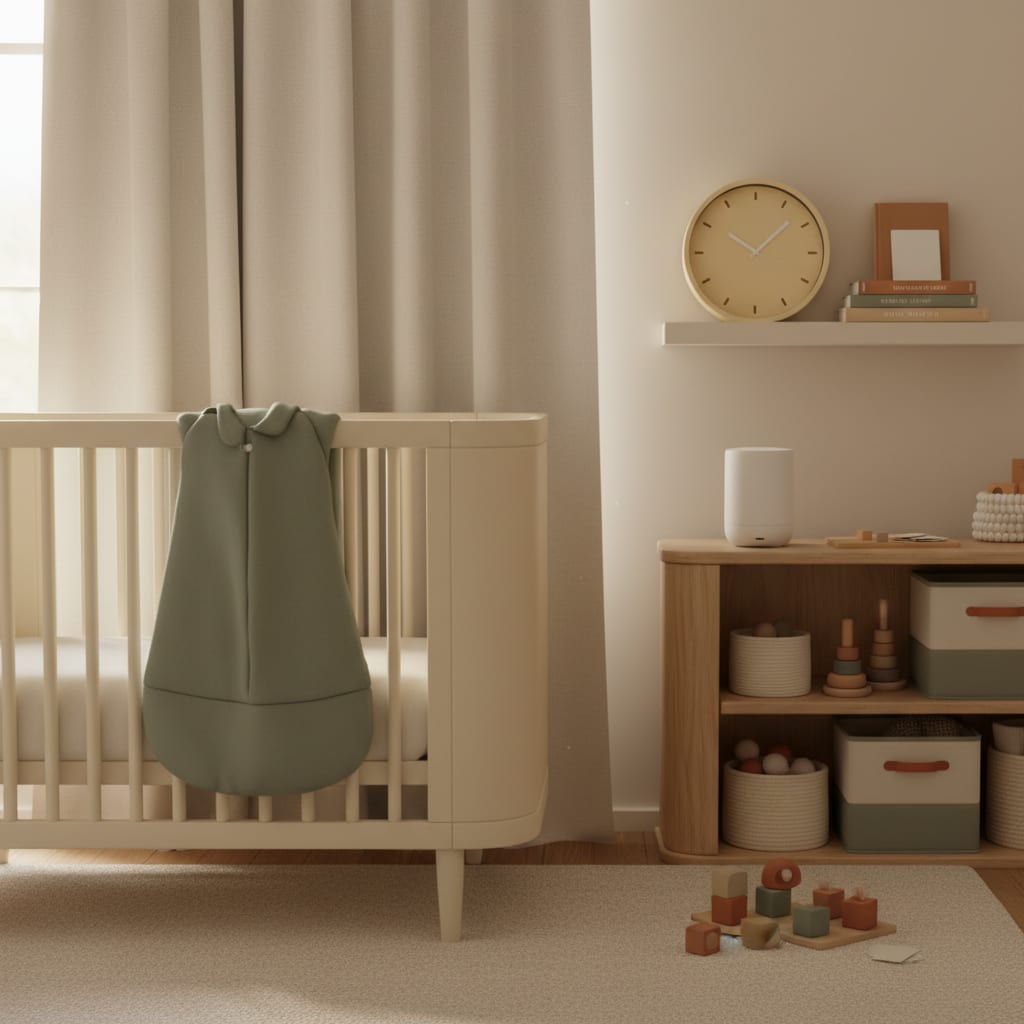
A SAHM day with an 18 month old is built around two naps — or the wobbly tail end of two naps — which chops the day into short blocks: a morning stretch of about two and a half hours, a midday stretch about the same, and a soft afternoon. Nothing runs long at this age; you’re filling ninety-minute windows, not three-hour mornings. Here’s our actual day with my son at eighteen months, block by block, plus the honest section on what happens when the morning nap starts dying — because at this age, it’s always either solid or dying.
The shape of the day: short blocks, twice the resets
My daughter at two ran on one glorious nap and long open mornings. My son at eighteen months runs on two naps, and the difference is bigger than it sounds: with two sleeps anchoring the day, no waking block is longer than about three hours, and most are shorter. That’s the two-nap reality — you never get a long stretch, but you also never have to fill one. The day is a string of short, manageable rooms instead of two big halls. It’s the same five-block rhythm as the full SAHM schedule, just with an extra sleep folded in.
Wake-up and the slow morning (6:00ish–7:30ish)
He’s my early riser — 6ish, sometimes rudely earlier. Milk, couch, breakfast, same order every day. At eighteen months he can’t run the chain himself the way a two-year-old can, but he absolutely knows it: he goes to his chair when the toast smells happen. Predictability is doing quiet work already.
First waking block (7:30ish–9:00ish)
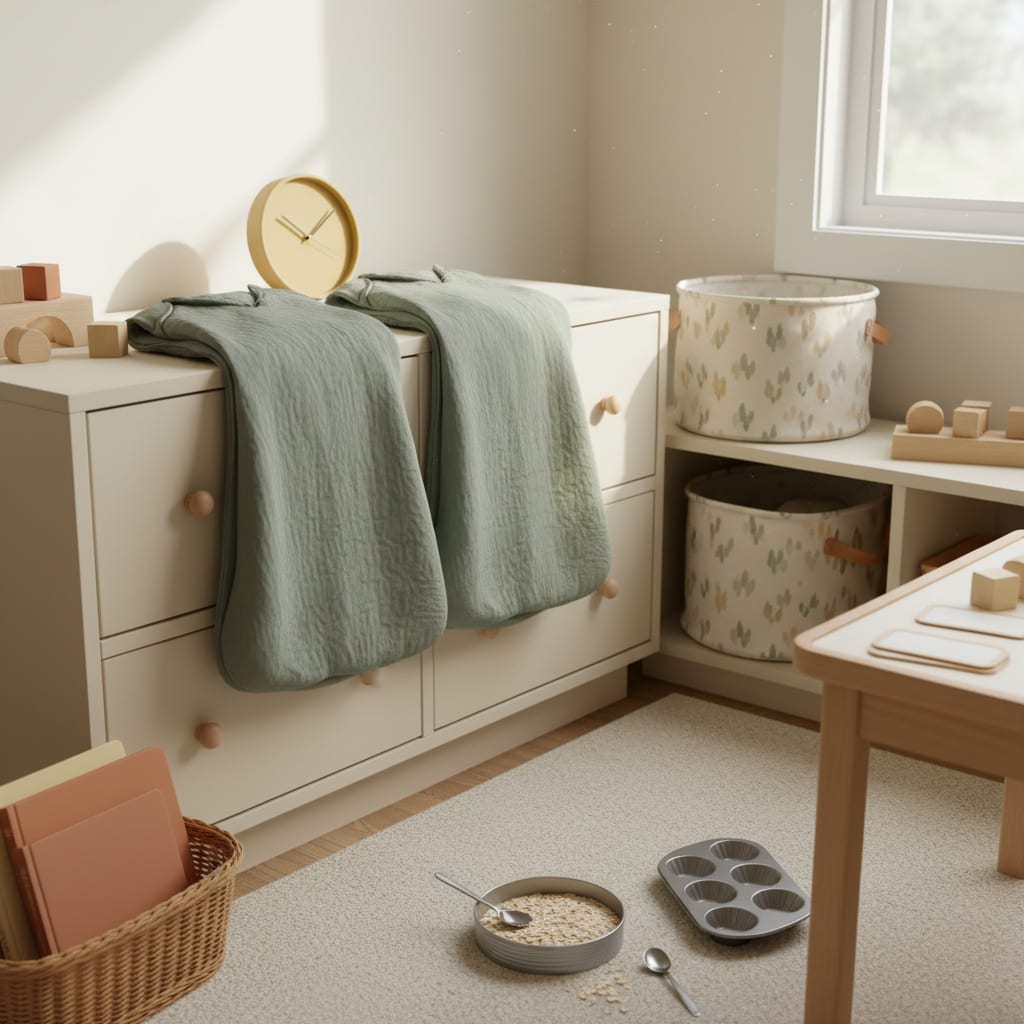
Short and sweet. This is a home block at our house — the play shelf, a taste-safe bin (oats and metal spoons, nothing he can’t mouth), emptying the tupperware cupboard while I do the breakfast reset. I don’t plan an outing here; there isn’t time to get anywhere worth going before the morning nap window opens. The one rule: I stay off my phone for the first chunk of it, because this block sets the tone for whether he plays near me or on me for the rest of the day.
Morning nap (9:00ish–10:15ish)
The first anchor. His was 9-to-10:15ish at eighteen months, and I treated the window like a meeting with my own sanity. This nap is the one that gets wobbly first — more on that below.
The big-ish block (10:30ish–12:00ish)
The best waking stretch of the day, so this is where the outing goes: park, library, the walk with many important sticks, the grocery run where he rides and narrates. Ninety minutes is exactly one outing with zero margin, which took me embarrassingly long to accept — we do one thing, we come home, lunch happens. If we stay home instead, this is the water-play or bin block, mouthing-age edition.
Lunch, second nap, and the afternoon (12:00ish on)
Lunch at noon-ish, then the afternoon nap around 1:00–2:30ish. Yes, that’s two guarded windows in one day, and yes, it torpedoes most social plans; this is the season of “we can meet at 10:45 for exactly one hour.” The afternoon after nap two is the standard low-key block — snack, backyard, stroller loop, easy play — into the dinner-bath-books-bed runway, down by 7:15ish.
When the morning nap starts dying
Somewhere between fourteen and eighteen-ish months, most kids make the two-to-one nap drop, and the transition weeks are genuinely disorienting — nap one fights you, nap two lands late, bedtime drifts, and the whole rhythm wobbles. Two things saved us. First: the blocks are chained to events, not times, so when the sleeps moved, the day slid instead of shattering. Second: I stopped guessing about the windows themselves. A personalized sleep plan like Betteroo sets the day’s actual nap windows for your kid’s age and adjusts them as the transition happens — which turned “is today a one-nap day or a two-nap day?” from a 9am panic into something I could just check. The rhythm needs a predictable anchor; at this age, predictability is something you sometimes have to engineer.
If you’re juggling this alongside an older kid’s schedule, the overlap math gets its own post — the toddler-and-baby day is where I untangle it.
What fills the blocks at eighteen months
Honest answer: not much, on repeat, happily. At this age novelty is wasted — he wants the same six things cycled. Ours: the oat bin, the water bin on a towel, board books in a basket, the tupperware cupboard, push-toy laps around the kitchen island, and being outside where the sticks live. Everything mouthable, nothing with small parts, all fifteen-second setups. The nap-anchored day only works if the blocks are easy to fill, and at eighteen months, easy means repetitive — that’s a feature of the age, not a rut.
FAQ: SAHM days with an 18 month old
How many naps should an 18 month old take?
Most are on one nap by eighteen months, but plenty are still finishing the two-to-one transition — there’s a wide normal band. Go by your kid: if two naps still come easily and bedtime isn’t suffering, two naps still work. If nap one is a daily fight, the transition is knocking.
How do you fill the waking blocks at this age?
With a short rotating cast of repeatable things: a taste-safe bin, water play, books, push toys, outside time. Blocks are only ninety minutes to three hours, so one small activity plus drift genuinely fills each one. Repetition is what this age wants.
Can you leave the house with two naps a day?
Yes, in the mid-morning block — roughly the stretch after nap one and before lunch. It fits exactly one outing. Trying to squeeze a second outing into the afternoon block is how naps get skipped and evenings get loud; one outing a day is the two-nap reality.
What’s the hardest part of the 18-month-old day?
The transition weeks when the morning nap dies — the rhythm wobbles daily and nothing lands where it used to. Chain your blocks to events instead of times, get the new windows from a plan that adjusts with age, and accept a few messy weeks; the one-nap day on the other side is genuinely easier.