The Naptime Hustle: Earning in 90-Minute Blocks
A naptime side hustle works when you stop treating naptime as ninety free minutes and start treating it as a block with a shape: roughly ten minutes of runway, fifty to sixty of real work, and a tail you can’t count on. The moms who earn in this block aren’t more disciplined than everyone else — they’ve pre-decided the task, removed the setup, and sized the work to the shortest nap of the week instead of the best one. Here’s how to build the block so it produces something, most days, without wrecking the rest of the day.
What ninety minutes actually gives you
Say the nap is ninety minutes. Here’s the honest accounting.
The first five to ten minutes aren’t yours — you’re in the hallway listening, putting the lunch things away, checking they’ve actually gone down. Then there’s a start cost: opening the laptop, finding where you were, remembering the point. Untrained, that’s another ten. At the other end you need a landing strip: five minutes to save, note where you stopped, and be a person again before someone yells.
So a ninety-minute nap is realistically a sixty-minute working block on a good day. That’s not a disappointment, it’s a design spec. Sixty focused minutes four or five days a week is genuine part-time output — roughly twenty hours a month — as long as you plan against sixty rather than planning against ninety and feeling bad about the gap.
It’s also a variable block. Some days it’s forty minutes; some days a sibling wakes the baby at minute twenty. Any system that only works on good days fails more often than it works, which is why everything below is built around the short version.
Size the task to the block, not the day
The single biggest reason naptime work fails isn’t interruption — it’s arriving at the block with a project instead of a task.
“Work on the client site” is a project. It has no natural stopping point, so you spend the first ten minutes deciding where to start and the last ten in a panic because nothing looks finished. “Write the FAQ section for the client’s services page” is a task. It fits, it ends, and it’s visibly done.
Three rules make this work:
Break work into forty-minute units. Not ninety. Forty means a short nap still produces something complete, and a good nap gives you a whole unit plus a start on the next.
Decide the unit before the block starts. The decision itself costs ten minutes of prime focus, and the tired brain that makes it at 12:45 makes worse calls than the one that made it at breakfast. Write down tomorrow’s unit at the end of today’s block, while you still know what’s next.
Keep a five-minute list. For the days the nap collapses at thirty minutes: invoice, one email, one photo edited, one listing posted. Small closed loops that still move things. It’s the difference between a wasted day and a small one.
The start ritual is most of the game
The failure is almost never mid-block; it’s the first eight minutes. You sit down, open your phone “just to check,” and reappear at minute twenty-five with forty minutes left and no momentum.
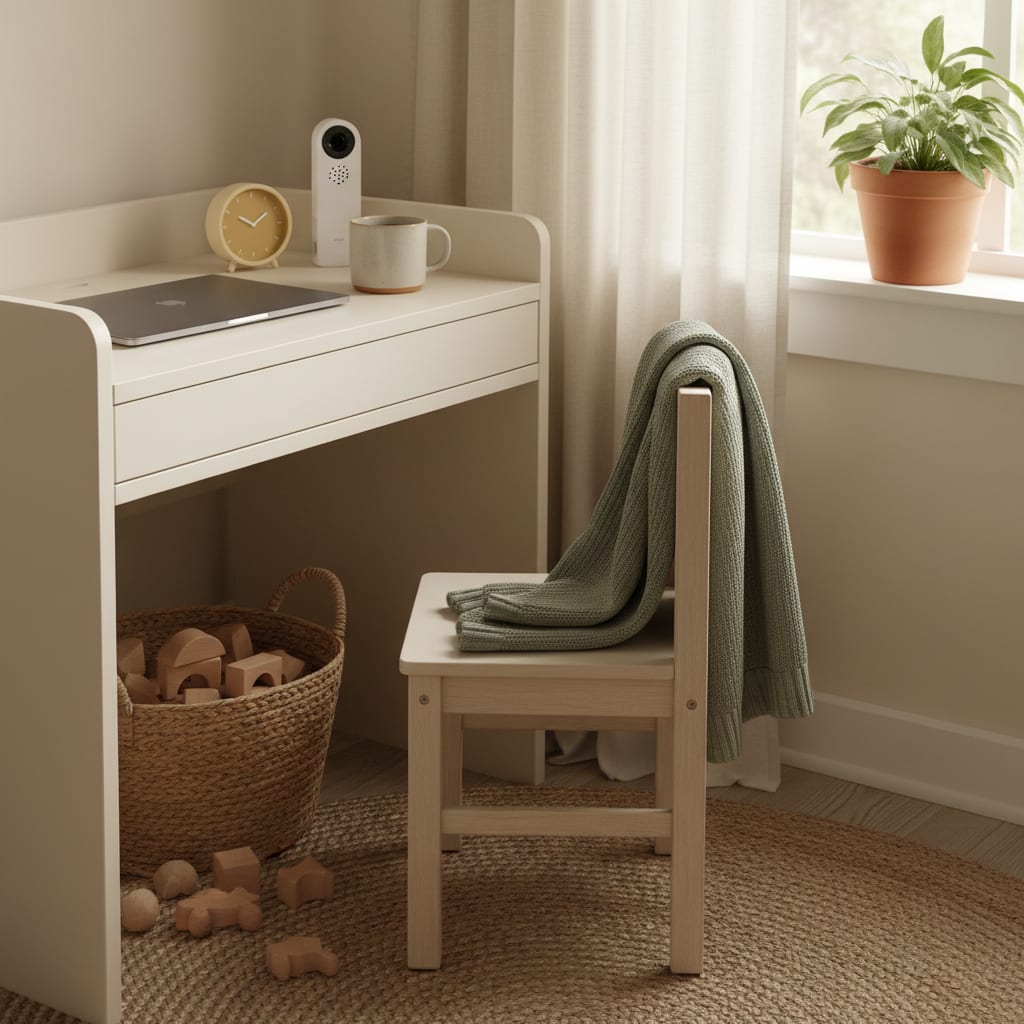
A ritual beats willpower because it removes the decision. Mine takes ninety seconds: laptop already open at yesterday’s file, water on the desk, phone in the other room, timer set. Then I start on the thing I wrote down yesterday, without reading anything first.
Two specifics worth stealing. Leave yourself mid-task — ending at a clean finish means tomorrow starts with a blank page, while stopping mid-paragraph means tomorrow starts with something obvious. And no inputs before output: email, Slack, group chats and analytics all feel like work and eat the good half of the block. Make first, read in the tail.
Match the work to the block’s real shape
Not every kind of work survives an interruptible daytime hour. The ones that do share three traits: they’re asynchronous, they tolerate being stopped, and they don’t require your voice.
- Produced output. Writing, editing, design, formatting, data cleanup, listing products, building a course module. Stops cleanly, resumes cleanly, nobody knows when it happened.
- Queue work. Anything arriving as a stack of discrete items — transcription files, tagging tasks, rater work, bookkeeping entries, order fulfillment. The ideal naptime shape, because the unit is already defined for you.
- Asynchronous client work. Deliverables with a day or two of slack in the deadline. Anything with a same-hour response expectation isn’t naptime work, it’s a job with a schedule.
What doesn’t fit: live calls, camera-on meetings, phone support, anything with a hard start time. A nap is not a calendar, and booking a 1pm call against a 12:30 nap is how you end up on mute in a closet. That family of work belongs in the after-bedtime block instead, where quiet contiguous hours are the whole point. If you’re still choosing what to do, our roundup of side hustles that pass the naptime test sorts the options by exactly this fit.
Protect the block from everything else
The block has competitors, most of them legitimate: dishes, the laundry mountain, the pediatrician’s office that’s only open while your kid is asleep, and the genuine desire to sit down for a minute.
You cannot have all of them. Decide in advance which naps are work naps — three or four a week, named days, not “whenever I feel up to it.” The rest go to the house, to admin, or to rest, on purpose. A block you renegotiate daily is a block you lose most days, which is the same argument as building the whole day around the nap in the first place: an anchored rhythm is what makes the midday block predictable enough to sell your labor into.
Two protections do most of the work. Run the ten-minute house reset before the nap, so the kitchen isn’t shouting at you at 12:40. And put the phone in another room — not face-down, another room. The five-second friction is the entire intervention.
Short-nap days and the days it just doesn’t happen
Some weeks the nap is thirty-five minutes and that’s the whole story. If that’s your normal rather than an occasional bad day, the fix probably isn’t discipline — short naps have causes, and why thirty-minute naps happen is worth reading before you rebuild your work life around them.
But some days simply die. The rule that keeps the system alive: don’t repay it that night. Once is fine; habitually turning your only recovery window into overtime brings resentment faster than income. Let the day go, do a five-minute-list item if you can, and take the next block.
And be realistic about capacity. Sixty minutes a day, four days a week, is roughly a part-time freelance load — not a replacement income, and not a business you can scale on naptime alone. When you need more hours than the block holds, the answer is a second block or a little coverage, not a longer nap.
FAQ: working during naptime
How much can you really get done during naptime?
Plan for about sixty productive minutes out of a ninety-minute nap once you account for settling, starting up and stopping cleanly. Four blocks a week is roughly twenty hours a month — real part-time output, but not a full-time income, and worth planning around honestly.
What if my child’s naps are unpredictable?
Design for the shortest nap, not the average one. Break work into forty-minute units and keep a five-minute list for collapsed days. If the unit is complete at forty minutes, an unpredictable nap costs you volume rather than progress.
Should I nap instead of working during naptime?
Sometimes, and it isn’t a failure. If you’re genuinely depleted, a rested afternoon is worth more than a distracted hour of work. Decide it in advance by naming your work naps for the week, so the choice is a plan rather than a daily negotiation you lose.
Is it better to work during naptime or after bedtime?
Naptime suits work needing your sharper brain — writing, thinking, anything creative. After bedtime suits contiguous, low-creativity work: queue tasks, admin, inbox clearing. Many moms use both, with the caveat that spending all seven evenings working is the fastest route to burning out.