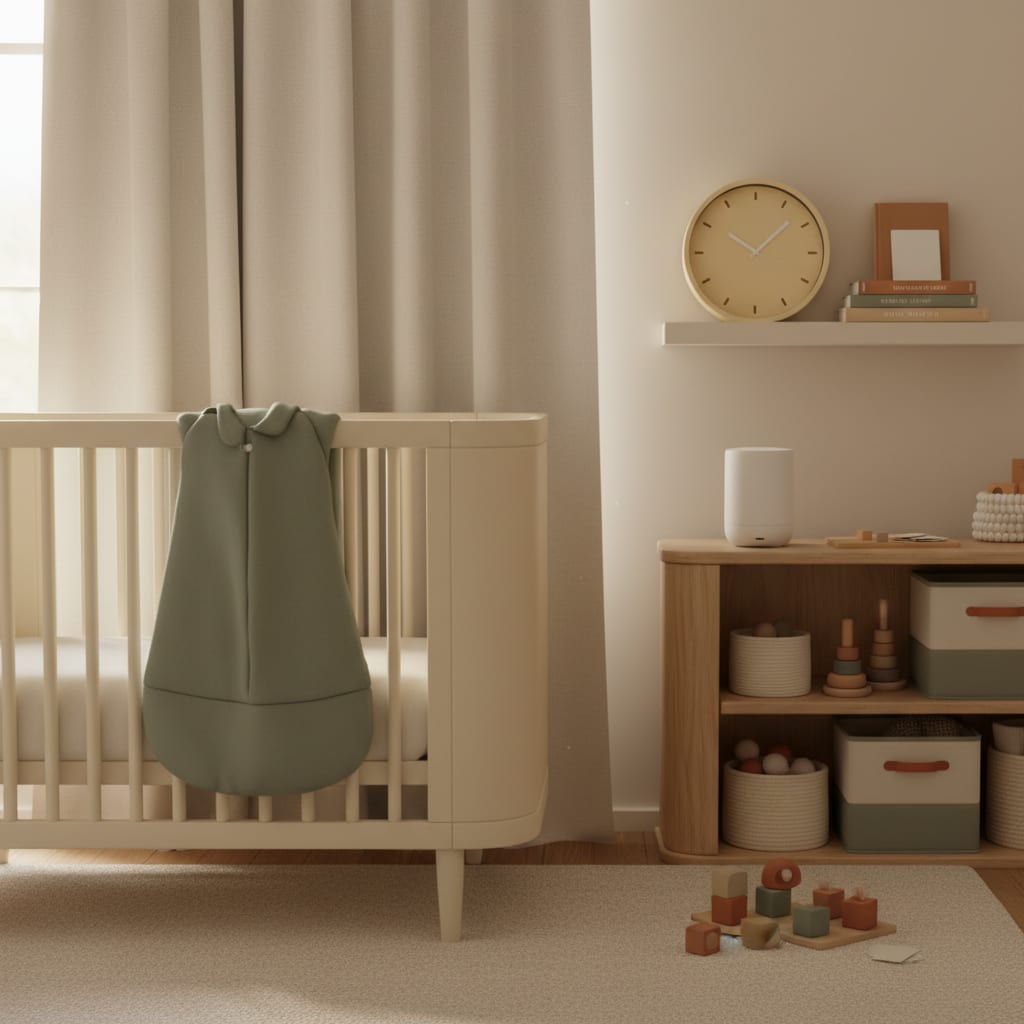
The Late Nap That Wrecks Bedtime (and the 6pm Meltdown)

A nap that starts at five buys you a quiet hour and charges you the whole evening for it. The reason is arithmetic, not willpower: bedtime only works when there’s a decent stretch of awake time in front of it, and a late nap eats that stretch. For most one-nap toddlers the day’s last sleep needs to be finished by around three to three-thirty for a seven o’clock bedtime to hold. And the 6pm meltdown you get when you block that nap isn’t proof the nap was needed — it’s a signal to move bedtime earlier tonight, not to sleep later this afternoon.
Why 5pm sleep and a 7pm bedtime can’t both happen
Falling asleep isn’t a decision a child makes at a set time. It’s what happens once enough pressure has built up since they last slept — and a nap, even a short one, discharges that pressure. Twenty minutes in a car seat at 4:45 wipes out most of an afternoon’s build-up. The child who was heavy-eyed at the traffic light is wide awake at eight, and nobody is being difficult.
So the useful number isn’t how long the nap was, it’s how long they’ll have been awake by bedtime. How long a child of a given age can comfortably stay awake sets the floor: a toddler needing five or six awake hours before bed, waking at 5:30, is telling you bedtime is now closer to eleven than to seven.
A late nap also doesn’t add sleep to the day, it relocates it. The totals pediatric guidance uses — 11 to 14 hours per 24 at one to two, 10 to 13 at three to five, naps included — stay roughly fixed, so an hour taken at 5pm mostly comes off the night.
The cut-off that protects bedtime, by age
Starting points, not rules. In all of them what matters is when the nap ends.
- Two naps still (roughly under fifteen months). The second nap wants to be over by four.
- One nap (roughly fifteen months to three). Over by about three, three-thirty at the outside. If it starts after two, cap it rather than letting it run.
- Naps fading (roughly three and up). Daytime sleep after about two-thirty will push bedtime — plan on moving it rather than pretending it won’t.
Length is the other lever, and the one most people forget. A twenty-minute nap discharges far less pressure than a ninety-minute one, so a capped late nap is survivable where a long one isn’t. Knowing how long naps run at each age is what lets you tell “she slept long today” from “that nap was double what it should have been”.
The 6pm meltdown is not proof the nap was needed
Here’s the trap. You skip the 5pm nap, and at ten past six the family is undone by a cup being the wrong color. It reads like evidence.
Usually it isn’t. It’s the day’s sleep debt arriving at the hour it always arrives — the child isn’t asking for a nap, they’re asking for bedtime. Debt makes children wired rather than sleepy, which is why what overtiredness does to an evening surprises people the first time they meet it head-on. The response is unglamorous: feed them earlier, drop the stimulation, start bedtime thirty to forty-five minutes early. An early bedtime isn’t a failure, it’s the pressure valve — and a plan for the day’s hardest hour is worth more than holding out.
One case is structural. If the crash holds across two ordinary weeks, they’re falling asleep in the car regularly, and bedtime got harder rather than easier, you may be looking at a nap dropped too early — a different problem with a different fix.
Where the late nap actually comes from
Almost nobody decides to put a child down at five. On home days it arrives from a short list.
The car. The biggest one, and a one-income problem as much as a sleep problem: one car means errands wait for the afternoon, and a warm, humming vehicle at 4:15 is the most effective sleep aid ever built.
A midday nap that didn’t work. Thirty minutes leaves a child short, and the body collects the difference at the first chance. The 5pm nap is the symptom; the midday nap is the repair.
Quiet time, or the couch. For a child on the edge of dropping naps, a dim room and a blanket at four is a nap whatever you call it — and so is the 4:45 snuggle while dinner starts.
Rescuing an evening the nap already took
When it happens anyway, stop defending the original bedtime.
- Cut it short if you can still get to them. Full daylight, normal noise, a snack waiting. Ten minutes of protest at 5:10 beats two hours at 7:30.
- Move bedtime deliberately. If they slept forty-five minutes at five, aim for eight-fifteen and make the evening boring rather than short.
- Keep tomorrow’s wake-up normal. Letting them sleep in to catch up pushes the rhythm later and buys a second bad night.
- Don’t shorten tomorrow’s real nap to compensate. That’s the loop that turns one late nap into a week.
- Let a one-off be a one-off. One late nap is a Tuesday, not a pattern.

When a late nap is genuinely the right call
Some days the answer is yes: illness, where a sick child sleeps when they sleep; a genuine no-nap day with bedtime four hours off, where a capped twenty minutes at two beats four hours of unravelling; a drive you can’t move.
The common thread: a chosen late nap comes with a chosen later bedtime. What wrecks an evening is a late nap plus an unchanged 7pm target.
Rebuilding the afternoon so it stops happening
If 5pm sleep shows up two or three times a week, the afternoon isn’t the problem. The midday block is.
Start by making the real nap worth taking: dark room, consistent wind-down, enough sound cover that the house doesn’t end it early. A mechanical sound machine like the Yogasleep Dohm beats a phone app because it never loops and never runs out of battery mid-nap. The rest — outing curfew, the ramp, aiming for the window not the clock — is what nap protection actually consists of.
Then move the driving. Errands, library, returns, pharmacy: cluster them into one morning and the 4:15 car nap stops being available. When you can’t, drive home with the windows down and a snack that requires chewing.
Finally, give the four-to-six stretch a job that involves being upright — water at the sink, the sprinkler, a picnic snack on the kitchen floor, twenty minutes outside even when nobody wants to go. Movement holds a tired child up better than screens do, and it moves dinner closer. On a wobbly day, eat at five and bath at six.
FAQ: late naps and bedtime
Is it bad if my toddler naps at 5pm?
It isn’t harmful, but it makes a normal bedtime very unlikely — a nap that late discharges the sleep pressure bedtime depends on. Expect a later, harder settle, and move bedtime deliberately rather than fighting for the usual time.
What time should a toddler’s last nap end?
As a starting point: around four for a baby still on two naps, three to three-thirty for a one-nap toddler, and about two-thirty for a preschooler whose naps are fading. Adjust to how long your child comfortably stays awake before bed.
Should I wake my toddler from a late nap?
Usually yes, if it started after about three. Waking them at twenty or thirty minutes limits how much pressure the nap releases, keeping bedtime within reach. Use full light, normal noise, and have a snack ready.
My toddler melts down at 6pm without the late nap. What should I do?
Treat it as a bedtime signal, not a nap signal. Bring dinner forward, drop the stimulation, and start bedtime thirty to forty-five minutes early for a few nights. If the crash holds for two full weeks and bedtime is also getting harder, look at whether the nap was dropped too early.
Can a late nap cause early morning waking?
It can, indirectly. Late naps push bedtime, an overtired child sleeps less soundly, and the debt often shows up as a 5am start rather than a lie-in. If early waking arrived alongside late naps, fixing the daytime timing does more than anything tried at dawn.