Backyard Play Stations for Long Afternoons
Backyard play stations are small, permanent zones — a water table under the tree, a mud kitchen against the fence, a chalk bucket by the door — set up once and left standing, so the yard entertains your toddler on repeat without a daily project from you. Think of it as the outdoor version of the play shelf: a handful of stations your kid can see and start using alone, which is exactly what the long, low-energy afternoon block needs. Here are the five stations that earn their footprint, how to prep each one in a single naptime, and the rules that keep them running until the weather turns.
Prep the yard once, not the activity daily
The reason “backyard ideas” lists fail by August is that every idea costs you a setup, and afternoon-you doesn’t have one in her. Stations flip the math: you invest one weekend naptime building the zones, and then every afternoon starts with “go pick a station” instead of you inventing something at 3:30 with a low battery. It’s the same prep-once principle that runs our summer rhythm — the structure absorbs the effort in advance so the daily version is nearly free.
Stations also solve the toddler-attention problem outdoors the way the shelf solves it indoors: defined zones with defined stuff produce longer, deeper play than an open lawn with a toy pile on it. A yard with edges plays better than a yard with everything.
The five stations that earn their keep
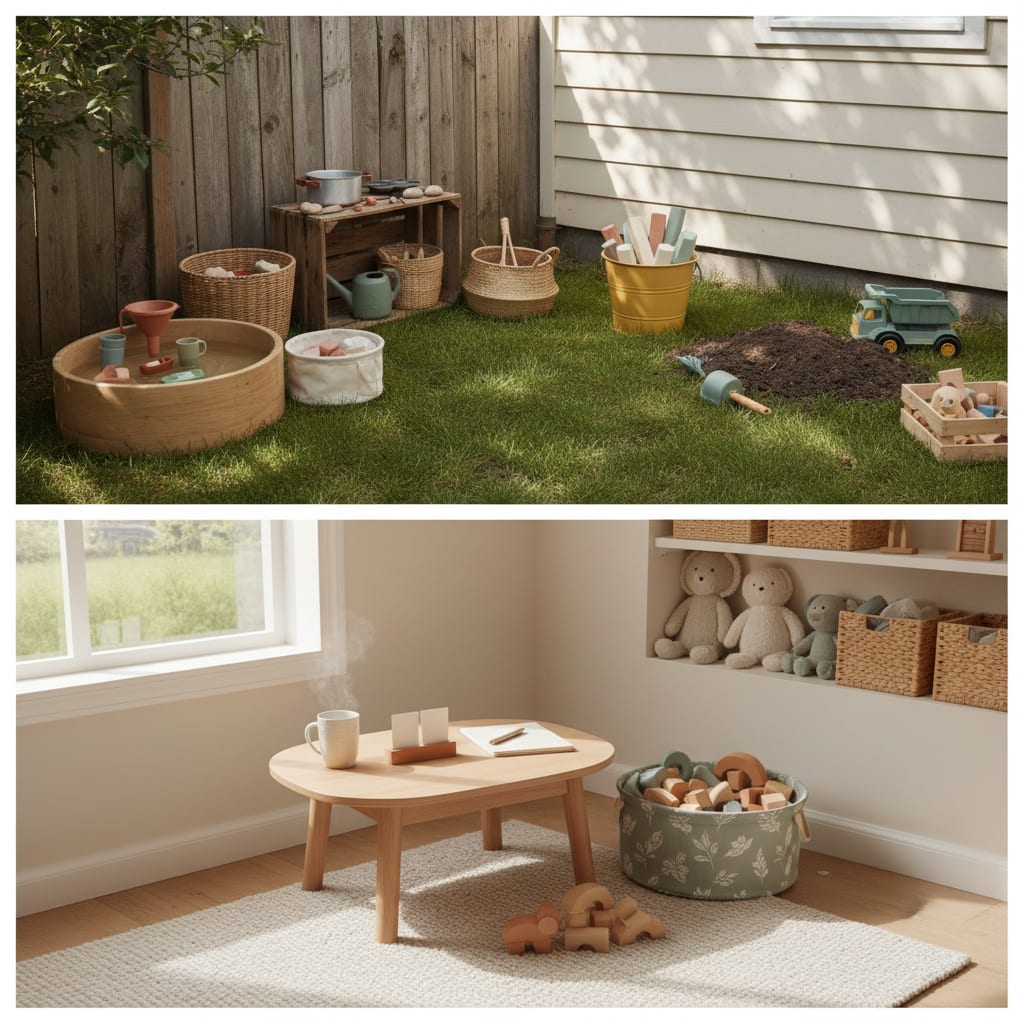
1. The water station. A water table if you own one; a storage-bin lid or dish tub on a stool if you don’t. Stock it with two cups, a funnel, and a couple of toy animals — rotate the props weekly, not the station. Park it in shade so it’s usable at 3pm, and dump it after each use (standing water breeds mosquitoes and worry). The standing rule, always: you’re within arm’s reach of any water play, every time — a couple of inches in a bin is still water.
2. The mud kitchen. Grandest name, cheapest build: an old pot, a metal spoon, a muffin tin, and a designated dirt patch or a planter of “cooking soil.” A crate or bench as the “stove” completes it. This is the deepest-play station on the list — pretend cooking runs a long time — and the mess is the point, so put it far from the door and near the hose. Thrift-store cookware only; nothing from your kitchen you want back.
3. The chalk-and-easel zone. A bucket of fat chalk living by the back door (in a lidded container — rain turns chalk to paste), plus fence pickets or the patio as canvas. The zero-energy station: no setup, no supervision intensity, and “paint the fence with a bucket of water” lives here too for days you want the art to disappear on its own.
4. The dig site. A corner of actual dirt — or a mortar-mixing tub of soil if you’re protecting the landscaping — with dump trucks, scoops, and a few burying-worthy treasures (large rocks, big shells; nothing mouth-sized for a kid still in the mouthing stage). Digging is the outdoor sibling of the sensory bin: same scoop-pour-bury loop, bottomless refills, zero cost.
5. The wash station. A bin of soapy water, brushes, and a rotating line of patients: trikes one day, toy animals the next, the muddy pot collection from station two. Doubles as the cleanup crew for the whole yard and as the bridge activity when a kid stalls — “the trucks need a bath” restarts a flagging afternoon reliably.
Five is the ceiling, not the target. Two good stations beat five neglected ones; start with water and dig, add as the yard proves itself.
Running the afternoon on stations
The stations’ job is the post-nap stretch — the soft, shady, low-battery block. Our loop: snack outside at the little table (a popsicle on the step counts), then release to stations while I sit somewhere with sightlines and a cold drink. I’m on lifeguard duty at water and mud, but the chalk and dig stations run on glances. Twenty minutes a station is a good toddler stretch; a full circuit carries most of the gap to dinner prep, and the wash station is deliberately last because wet-and-soapy is a natural endpoint.
Ground rules that keep it sustainable: stuff stays at its station (a crate at each zone makes the reset a two-minute toddler job — “everything back in its box” is the exit ticket to go inside); shade and sunscreen are non-negotiable even at 4pm; and stations close for the day when the reset doesn’t happen, which enforces itself after one sad chalk-less afternoon. When the outdoor window shrinks in fall, the same station logic moves inside — the easy-activities-by-block list is the indoor equivalent.
FAQ: backyard play stations
What’s the best backyard setup for a toddler?
Two to five small fixed zones beats one big splurge: a shaded water table or tub, a dirt dig corner with trucks, chalk by the door, and a junk-cookware mud kitchen cover ages one to four for close to nothing. Fixed and visible is the key — a toddler restarts play alone when the station is standing ready.
Do backyard stations need to be supervised?
Water and mud, yes — arm’s reach for anything involving water, every time, and empty containers after use. Chalk, digging, and wash-the-trikes can run on line-of-sight from a chair once your kid is reliably past the everything-in-the-mouth stage. Match the station list to the kid you actually have.
How do I keep the yard from becoming a disaster?
A crate per station and a two-minute reset before coming inside. Toys that live at their zone don’t migrate into the lawn-mower path, and lidded storage means rain doesn’t total the chalk or the cookware. The reset is part of the play, not a chore after it — toddlers genuinely like the everything-home routine.
Is it worth building stations late in the summer?
Yes — the stations run until the weather turns, they cost almost nothing if you build from what you own, and the water and dig zones come back online every warm season after. An hour of setup in July still buys you two-plus months of self-starting afternoons this year alone.