The Sunday Reset That Makes Home Weeks Run Smoother
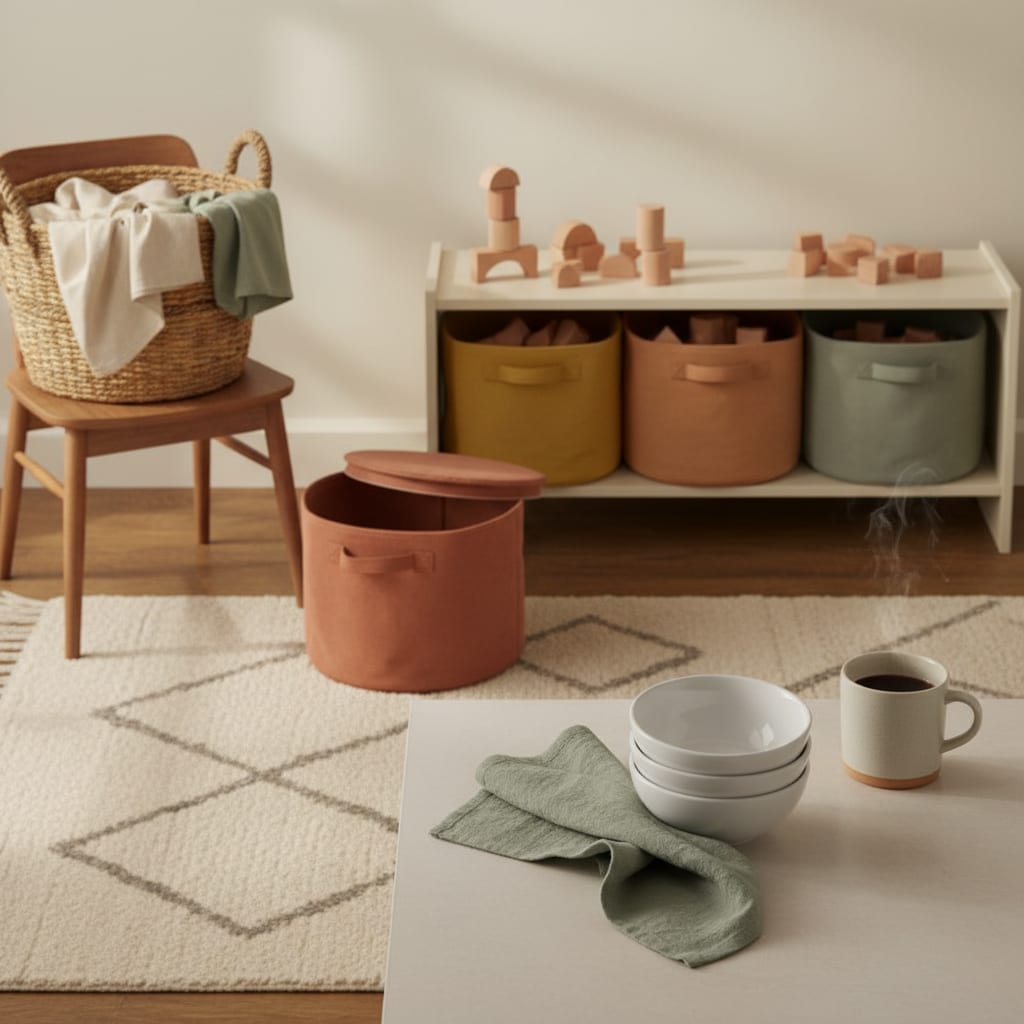
A Sunday reset is not a cleaning session. It’s ninety minutes spent removing decisions from the coming week — deciding the five dinners, resetting the kitchen and the play space, running one load of laundry to the end, and writing down the three things that actually have to happen. Home weeks don’t get hard because of the work; they get hard because every block requires a fresh decision from a person who has already made two hundred of them. Front-load the decisions on Sunday and Tuesday afternoon stops being an improvisation.
What a reset is actually for
Cleaning is the visible part and the least important part. The real product of a reset is a week with fewer open questions in it.
Think about what actually derails a Tuesday: it’s 4:40, nobody has decided what dinner is, there’s no clean sippy cup, the play shelf has been picked over since Thursday, and the library books are due today. Not one of those is a big problem. Together they’re the reason the day feels like it’s happening to you. Every one of them is a decision or a five-minute task that could have been settled on Sunday by a version of you who wasn’t holding a toddler.
So the test for anything on the reset list is: does this remove a decision or a bottleneck from a weekday? If it doesn’t, it belongs on a regular cleaning rhythm instead, spread across the week where it can’t eat a Sunday.
The ninety-minute version
Blocks, in this order, because each one makes the next faster:
Kitchen (25 minutes). Empty the dishwasher, clear and wipe the counters, take one honest pass at the fridge — anything furry out, anything about to turn moved to the front for Monday. The goal is a kitchen you can start cooking in without a preliminary tidy, because that preliminary tidy is what makes people order takeout at 5:15.
Food decisions (20 minutes). Five dinners on paper, not seven. Two nights are leftovers or breakfast-for-dinner, and you leave one slot deliberately blank for the day that goes wrong. Then the grocery list writes itself from the dinners, which is how a grocery routine stops leaking money — you’re shopping a plan rather than restocking a vibe.
Laundry (one load, to the end). Not all of it. One load, washed, dried, folded and put away, so Monday starts with an empty machine and a clear surface. The load that lives in the dryer all week is the one that makes the whole system feel broken.
Play space (20 minutes). This is the one most reset lists skip and it might be the highest-value block. Everything back in its bin, and then swap two or three things — pull one bin from the closet, retire one that’s gone stale. If you already run a toy rotation, Sunday is when it turns over. A refreshed shelf is worth roughly twenty minutes of independent play a day for the first few days of the week, and that’s twenty minutes you get back every single morning.
The launch pad (10 minutes). Shoes, bags, library books, the diaper bag restocked, the stroller back in the car, the returns by the door. Everything that makes a weekday exit slow, handled once.
Sit down (15 minutes). Genuinely part of the reset. Coffee, feet up, look at the week. If you skip this the whole thing becomes another chore block and you’ll quietly stop doing it by the third week.
The five decisions worth making in advance
Independent of the tidying, these five settle the week:
- The five dinners. As above. This one decision prevents more 5pm chaos than anything else in the house.
- Which day is errand day. One day carries the errands; the rest of the week’s outings can be free. The errand-day system works far better when the day is set on Sunday rather than chosen on Wednesday out of desperation.
- The three things that must happen. Not a to-do list — three items. The appointment, the form, the phone call. Anything beyond three isn’t a priority list, it’s a wish.
- One thing for you. A specific hour on a specific day. Unspecified “self-care sometime this week” reliably becomes nothing; “Thursday morning I’m going to the coffee shop while Dad has them” happens.
- What’s getting dropped. Look at the week and cut one thing on purpose. This is the decision that makes the other four survivable.
What to leave off the list on purpose
The reason most Sunday reset routines die by week three is scope. The internet version involves scrubbing baseboards, meal-prepping fourteen containers, and a full house detail — three hours of work on the one day you might have help, which is exactly the day you should be getting a break.
Leave off: deep cleaning of any kind, bathrooms beyond a wipe of the sink, anything involving a label maker, and any project. Also leave off the aspirational version of the week — the one with the craft, the museum, and the sourdough. A reset is preparation, not a resolution. It should end with you sitting down, not with you further behind than you started.
And if the reset itself becomes a source of dread, cut it to twenty minutes: dinners decided, kitchen cleared, one load through. That version, done every week, beats the full version done twice a month by an enormous margin.
If Sunday doesn’t work for you
Sunday is convenient because there’s often a second adult around, but the day matters much less than the consistency. Friday afternoon resets work well if your weekends are unpredictable. Monday-morning resets during the independent-play block work if your weekends belong to family. Some people split it — food decisions on Saturday, the physical reset on Sunday evening.
What doesn’t work is a floating reset that happens “when there’s time.” There is never time; there’s only a slot you defended. Pick one and treat it as the appointment that makes the other six days cheaper.
How long before it pays off
Give it three weeks. The first one feels like an extra chore, because you’re resetting a house that has a month of drift in it. The second is faster. By the third, weekdays start feeling different in a way that’s hard to attribute to anything specific — that’s the decisions you already made showing up. This is also the point where you find out which blocks matter for your household, and you can drop the ones that don’t.
FAQ: the Sunday reset routine
What should be included in a Sunday reset?
A kitchen clear-down, the week’s dinners decided, one load of laundry all the way through, a play-space reset with a small toy swap, and a launch-pad pass for shoes, bags and returns. Anything that doesn’t remove a decision or a bottleneck from a weekday belongs elsewhere.
How long should a Sunday reset take?
About ninety minutes including a sit-down at the end, and a twenty-minute minimum version — dinners decided, kitchen cleared, one load through — for weeks where ninety isn’t available. Consistency matters much more than completeness.
Do I need to meal prep during a Sunday reset?
No. Deciding the meals is the part that pays; cooking them in advance is optional and is the first thing to drop. Five decided dinners with one blank night removes the 5pm scramble whether or not anything is pre-cooked.
What if I have no help on the weekend?
Shrink the list and use naptime or quiet time on Saturday and Sunday rather than trying to reset with kids underfoot. The food decisions and the launch pad can be done sitting down with a toddler in the room; the physical blocks are the ones that need the quiet hour.