Free Printable Toddler Routine Cards
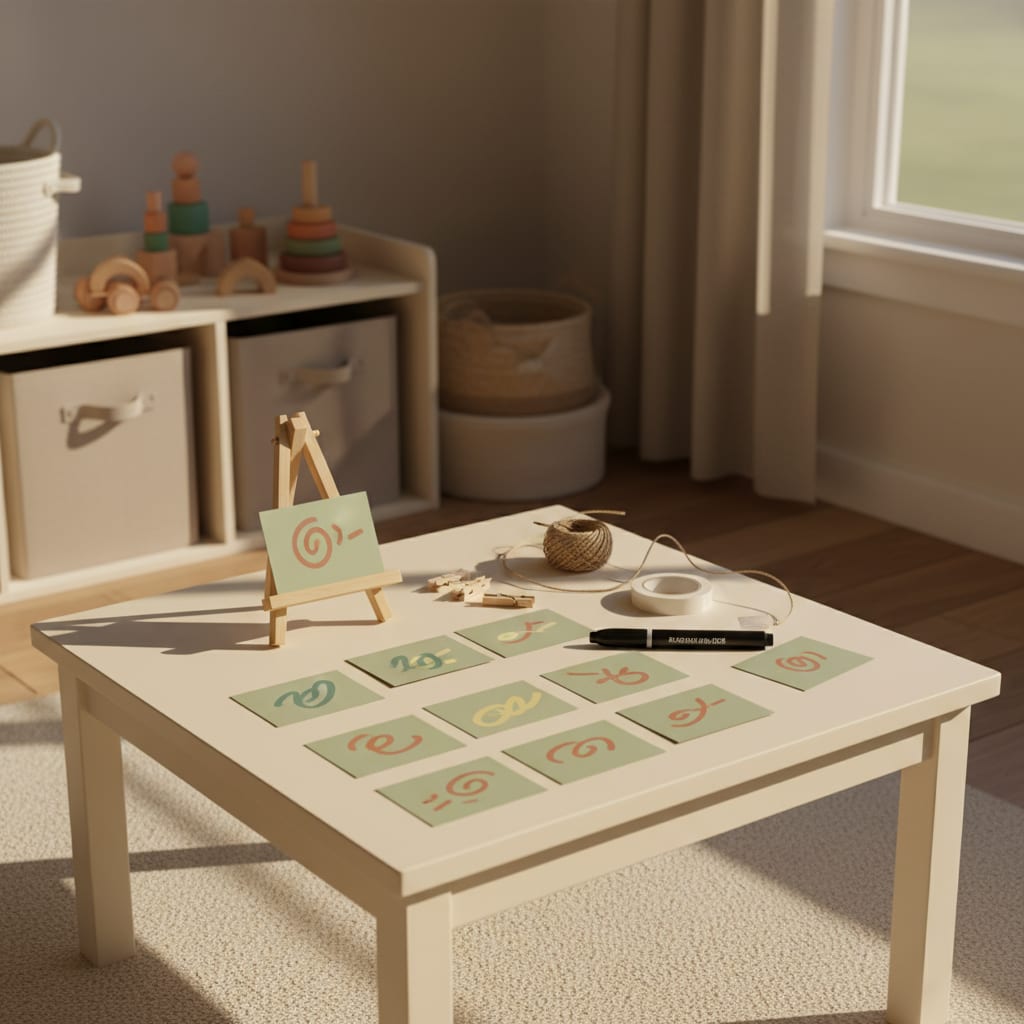
Toddler routine cards are small picture cards — one per step of the day (cup, bowl, shirt, toothbrush, bed) — displayed in order at your child’s height so they can see, move, and eventually run their own routine. You need about twelve cards to cover a whole home day, they take ten minutes to make with index cards and a marker, and they work because they transfer ownership: the sequence stops being your nagging and becomes something the toddler checks, moves, and enforces — usually on you. Here’s the exact card set, the make-your-own method from my classroom years, and how to introduce them so they stick.
Why cards work when reminders don’t
Every preschool classroom has a picture schedule on the wall, and it isn’t decor — it’s load-bearing. Toddlers can’t read clocks or hold a six-step plan in their heads, but they’re phenomenal at reading pictures and remembering order. A card sequence gives them the plan in a form they can own. The shift is subtle and enormous: “come get dressed” is you versus them; a shirt card sitting next in line is just… what’s next. Kids argue with parents constantly and with calendars almost never.
At home, the cards do one more quiet job: they keep you consistent. The chain only works if it never shuffles — the cards make the order official, weekend-dad-shift included.
The 12-card set that covers a home day
You don’t need a card for everything — just the steps that involve transitions (that’s where the battles live). Our set:
The morning chain (5): milk cup — breakfast bowl — shirt — toothbrush — toy shelf. This is the spine of the morning routine, card for card.
The midday ramp (3): lunch plate — books — bed. The same three cards serve the nap ramp now and quiet time later — when the nap ends, the “bed” card stays and the meaning shifts. Kids handle that switch better than you’d expect; the ramp is the ritual, not the sleep.
The runway (4): dinner plate — bathtub — books — bed. Yes, “books” and “bed” repeat from midday. Make duplicates; toddlers find the repetition deeply satisfying rather than confusing.
That’s the core twelve. Optional extras once the system is running: an “outside” card and a “clean up” card for the play blocks, and a “car” card if getting out the door is your personal battleground.
Make your own in ten minutes (really)
I’m working on turning our hand-drawn set into a proper print-ready sheet for the site — but I’d tell you to make your own first anyway, because the homemade version has survived two kids and the laminated store-bought sets I’ve watched other families buy mostly haven’t. The DIY method, straight from my classroom days:
- Twelve index cards, or a cereal box cut into rectangles. Sturdy beats pretty.
- One simple drawing per card, marker, ten seconds each. A circle with steam is a bowl. A rectangle with a stick is a toothbrush. Your toddler is the least judgmental audience on earth, and a kid who watched you draw the cards is invested in the cards.
- Color-code the chains if you like — one marker color per chunk of day (we did butter yellow for morning, green for midday, terracotta-ish for bedtime). Toddlers read color before anything else.
- Clear packing tape over the faces if you want them wipeable. Skip the laminator.
- Mount at their height, in order, somewhere on the routine’s path: clothespins on a string, a strip of painter’s tape on the hallway wall, magnet dots on the fridge’s bottom half. Add an envelope or basket at the end — the “done” pocket.
Total cost is roughly a marker and some tape, and when a card gets destroyed (it will be the toothbrush card; it’s always the toothbrush card), you redraw it in ten seconds instead of mourning a laminated set.
Teaching the cards: the two-week arc
- Days 1–2: just narrate. Cards up, you move them as the day happens. “Breakfast is done — bowl card goes in the pocket! What’s next? Shirt!” No demands yet; you’re introducing a game.
- Days 3–7: hand over the moving. The toddler moves each card as its step finishes. Moving the card becomes the reward for the step — do not underestimate how motivating a “done” pocket is to a two-year-old.
- Week two: let the cards do the talking. When a transition stalls, stop issuing instructions and ask the wall instead: “check your cards — what comes next?” This is the handoff moment. Somewhere in this week most kids start policing the sequence themselves, and you’ll get corrected the first time you try to skip teeth. Congratulations: the routine now has a second enforcer.
From there the cards run the transitions inside the day, and the day itself hangs on the block rhythm — the cards are the toddler-eye-level version of the five-block schedule that runs the whole house.
FAQ: toddler routine cards
What age can a toddler start using routine cards?
Around eighteen months to two years for card-moving with help, two-plus for real ownership. Younger toddlers still benefit from watching you move the cards — they absorb the order long before they can run it.
How many routine cards does a toddler need?
About twelve covers a full home day: five for the morning chain, three for the midday ramp, four for the bedtime runway. Start with just the morning five if your toddler is young or the battles are concentrated there; add chains as each one sticks.
Do the cards need real photos or fancy printing?
No — simple line drawings work as well as anything laminated, and homemade cards your toddler watched you draw often work better. What matters is one clear image per step, mounted in order at their height, and an order that never shuffles.
What if my toddler ignores the cards?
Almost always it’s a teaching gap, not a card problem: go back to narrating and moving the cards yourself for a few days, make the “done” pocket the fun part, and keep your own consistency airtight. Cards can’t fix a sequence that changes daily — they can only make a stable one visible.