Turning Down the Bed: A Toddler Bedtime Job That Works
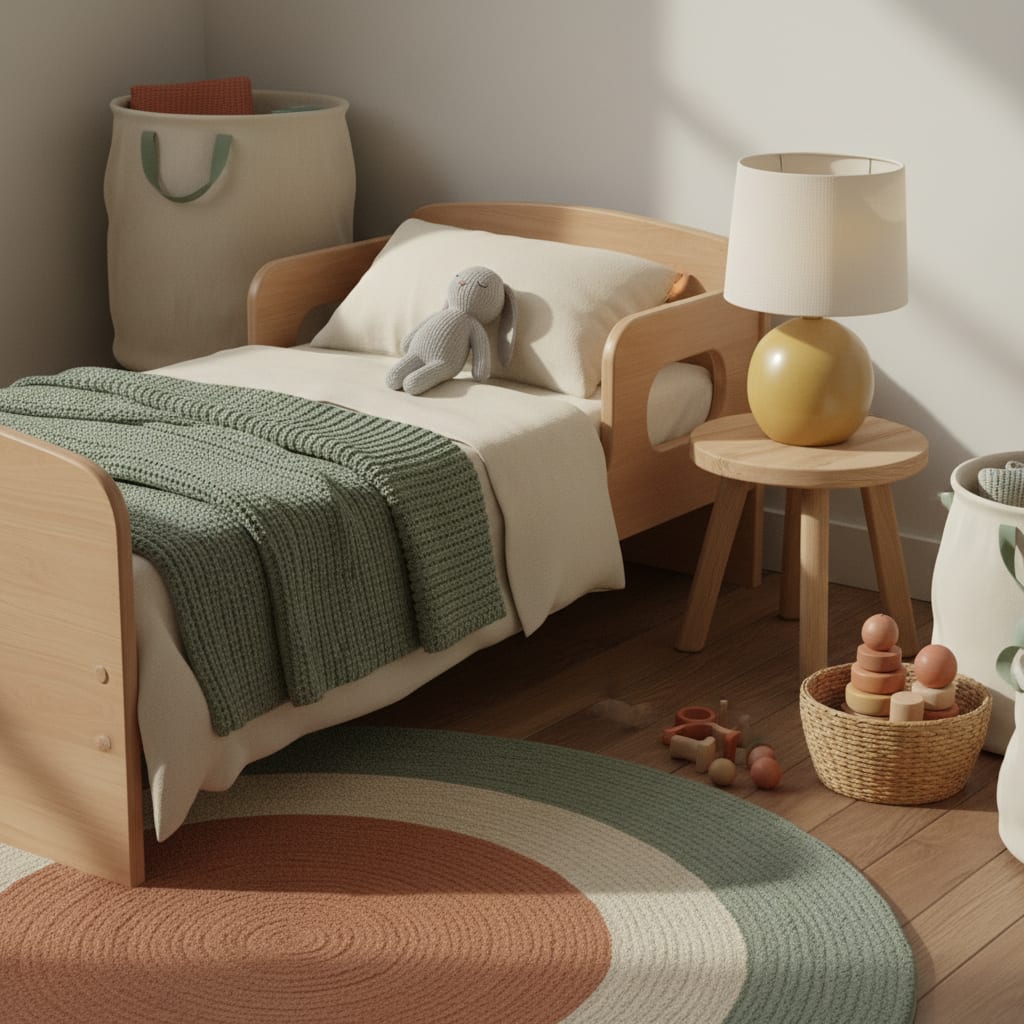
Turning down the bed together works as a bedtime cue because it gives the end of the day a job instead of an announcement. After pajamas and teeth, your toddler walks into their room, folds back the corner of their blanket, puts their lovey “to bed” on the pillow, and climbs in. It takes about two minutes. It happens the same way every night, and your child does it with their own hands. That makes the evening’s last transition something they run rather than something done to them. It suits children over 12 months who sleep in their own crib or bed. Babies under one sleep with no loose bedding at all.
Why a job beats “time for bed”
Most bedtime friction lives in one sentence: “Okay, time for bed.” It’s a decision made for a toddler, announced to a toddler, at the exact hour they have the least patience left for decisions made for them.
A job changes the shape of that moment. Toddlers love real work, which is why the toddler morning routine on this site runs as a chain of steps a toddler can see and do, not a string of reminders. At bedtime, a job does three things at once:
- It turns a transition into a task. Walking to the bedroom stops being the end of fun and becomes the start of something they’re in charge of.
- It hands over a little control. Betteroo’s piece on why the requests pile up at lights-out notes that bedtime is decided for children, so they make “lots of tiny decisions inside it: which cup, which door gap, which song.” A turn-down puts a few of those decisions where you want them: which corner gets folded, which side the bunny sleeps on.
- It’s the same every night. That’s the whole point of a routine. In a survey of mothers of more than 10,000 children up to age 5, Mindell and colleagues found that a consistent bedtime routine was associated with falling asleep faster, fewer night wakings and longer sleep, and that outcomes were better the more nights a week families did one. That’s an association, not proof, but it argues for steps a toddler can repeat.
Bookends: the morning pull-up and the evening turn-down
On a home day, the bed is one of the few objects that sees both ends of the day. That makes it a natural pair of bookends.
In the morning, in the after-breakfast reset, the blanket gets pulled up flat and the lovey sits on top. A two-year-old’s version is lumpy and that’s fine; it isn’t housekeeping, it’s a signal that the bed is closed for the day. At night the same blanket gets folded back, which is the signal that it’s open again.
Toddlers don’t track the clock, but they track sequences very well. A bed that’s “closed” all day and “opened” by their own hands at night gives them a physical marker of the day’s end. They can see it and do it, and don’t have to take your word for it.
If you use picture routine cards, the “bed” card at the end of the evening runway already means this.
The turn-down, step by step
Put the turn-down after the loud part of the evening is over. If your toddler gets a burst after dinner, give the burst its own slot first, then start the calm chain. A typical order:
- Bath or wash, pajamas, teeth in the bathroom, lights still on.
- Walk to the bedroom together. Switch the big light off and a lamp on as you go in. The room should already be dim when the job starts.
- The turn-down. Your toddler takes the top corner of the blanket and folds it back toward the foot of the bed in one triangle. Then the lovey goes on the pillow, or “to bed” in the corner of the crib.
- One small choice. Which of two books, or which side of the lovey they sleep on. One choice, not five.
- Climb in. You read, they get tucked into the bed they opened, goodnight.
Use the same words every time. A short line works: “Bed’s open. Bunny first, then you.” The words become part of the cue, which is useful on nights at a grandparent’s house or in a travel crib, where the bed is different but the job isn’t.
What the job looks like by age
- 12 to 18 months, in a crib: there’s not much to fold, so the job is placing. Your toddler hands you the lovey or drops it over the rail, and you both “say goodnight” to the crib. If you use a light blanket at this age, lay it flat yourself.
- Around 2: folding back one corner, patting the pillow flat, putting the lovey down. Expect it to be wonky. Resist the urge to fix it while they’re watching.
- Around 3 and up: the whole turn-down, plus a small extra like setting the nightlight or choosing tomorrow’s lovey position. A three-year-old who folded their own corner has much less to argue about when you leave.
Who this is for: the safe-sleep line
This is a job for toddlers and preschoolers in their own crib or bed. It isn’t for babies.
The American Academy of Pediatrics is clear that a baby’s sleep space should be bare. HealthyChildren’s parent’s guide to safe sleep lists pillows, quilts, comforters, non-fitted sheets, blankets and toys among the soft objects and loose bedding that raise a baby’s risk. It notes those recommendations apply to babies up to 1 year of age, and suggests layers or a wearable blanket if you’re worried about a baby getting cold.
After the first birthday the picture changes a little. Nemours KidsHealth’s toddler sleep page says blankets aren’t recommended before a child’s first birthday, but that at 1 to 2 it’s OK to put a light blanket in the crib. It also says a small lovey is fine and can be very comforting, but extra-large soft toys and stuffed animals shouldn’t go in. So keep the lovey small: something like the Jellycat Bashful Bunny, medium, rather than a giant plush. If you’re unsure about bedding for your child, ask your pediatrician.
When the turn-down turns into a stall
Any bedtime job can grow. The blanket has to be refolded until it’s perfect, then six stuffed animals each need tucking in, and the two-minute cue is now twenty minutes. A few limits keep it a cue:
- One fold, one lovey, one choice. Decide the job’s size in daylight and keep it that size at night.
- A wonky fold counts. If you redo it, they learn that the job is about pleasing you, and the job stops being theirs.
- The job happens once. If they climb out and want to “do it again”, that’s a return to bed, not a second turn-down. KidsHealth’s preschooler sleep page puts it simply: if your child gets out of bed, calmly take them back.
- Whoever does bedtime runs the same job. If your partner covers some nights, the steps and the words don’t change.
If you tend to doze off once your toddler is down, a turn-down also shortens how long they need you in the room. More on that in falling asleep putting your toddler to bed.
 A cue works best at the right time
Betteroo looks at your toddler's age, naps and wake-up time and suggests a bedtime that matches their real sleep window, so the turn-down lands when they're ready for it.
Take the 2-minute sleep quiz →
FAQ: turning down the bed with a toddler
What age can a toddler help make their bed?
Most toddlers can help with a small part of it from around their first birthday, such as placing a lovey. Folding back a blanket corner is often easier closer to 2. Babies under 12 months shouldn’t have blankets or toys in their sleep space at all.
Should a toddler make their bed in the morning too?
It helps if you want bookends. A blanket pulled flat in the morning and folded back at night gives your toddler a clear marker of the start and end of the day. It doesn’t need to be neat to work.
What if my toddler refuses to do the job?
Do it together without making a fuss, and keep the same words. Refusal is usually about the transition, not the blanket. If bedtime is a battle most nights, look at timing too: a toddler who isn’t tired yet will resist any cue.