Is 6am Early Waking, or Just Your Child's Day?

A 6am wake-up is not automatically early waking. For a great many babies and toddlers it sits inside the ordinary range, and the clock is the wrong thing to judge it by. The test is whether your child is rested: a reasonable total across the day, still pleasant ninety minutes after waking, and 6am holding steady for weeks rather than creeping earlier. Yes to all three and there’s nothing to fix — you have a day that begins at six, and it needs a rhythm built for that rather than one you’re perpetually late for.
Three tests that separate a riser from a drift
Run these before changing anything about bedtime.
1. The total, not the start time. Add night sleep and day sleep together. A child asleep at 6:45pm and up at 6am has had eleven and a quarter hours before naps enter the picture — respectable by any commonly cited range. The same child up at 6am after an 8:30pm bedtime has had nine and a half, an entirely different situation. Early waking is a sleep-quantity problem; 6am on its own is just a time.
2. The ninety-minute mood check. Under-slept kids don’t act sleepy — they act frayed. A true early riser wakes cheerful and is still cheerful at 7:30. A child running a deficit is fine for twenty minutes on adrenaline, then unravels over the wrong spoon before eight. That second wave is the tell.
3. The stability check. Look back three or four weeks. A stable 6:05–6:20 is a body clock; a slide from 6:45 to 6:20 to 5:50 is a drift, and drift always has a cause. Any wake-up in the 5s deserves investigating regardless of mood — that’s the range where the usual drivers of genuinely too-early waking are worth working through properly.
Two of three isn’t a pass. If the totals are fine but the mood collapses by 8am, something in the day is off even though the clock looks defensible.
What a drift actually looks like
When 6am is a symptom, it’s nearly always one of four things, none of them “she’s just an early bird.”
Bedtime is too late. The most counterintuitive and the most common. Overtired children sleep worse and wake earlier, not later, so pushing bedtime back to buy a later morning is the most reliable way to get an earlier one.
The last nap ends too late, or runs too long. A nap finishing at 4:30 leaves too little pressure for the night to hold; one that quietly stretched to three hours has borrowed from the wrong end of the day. That’s nap architecture, not bedtime — which is why anchoring the day around the nap block fixes mornings you thought were a bedtime problem.
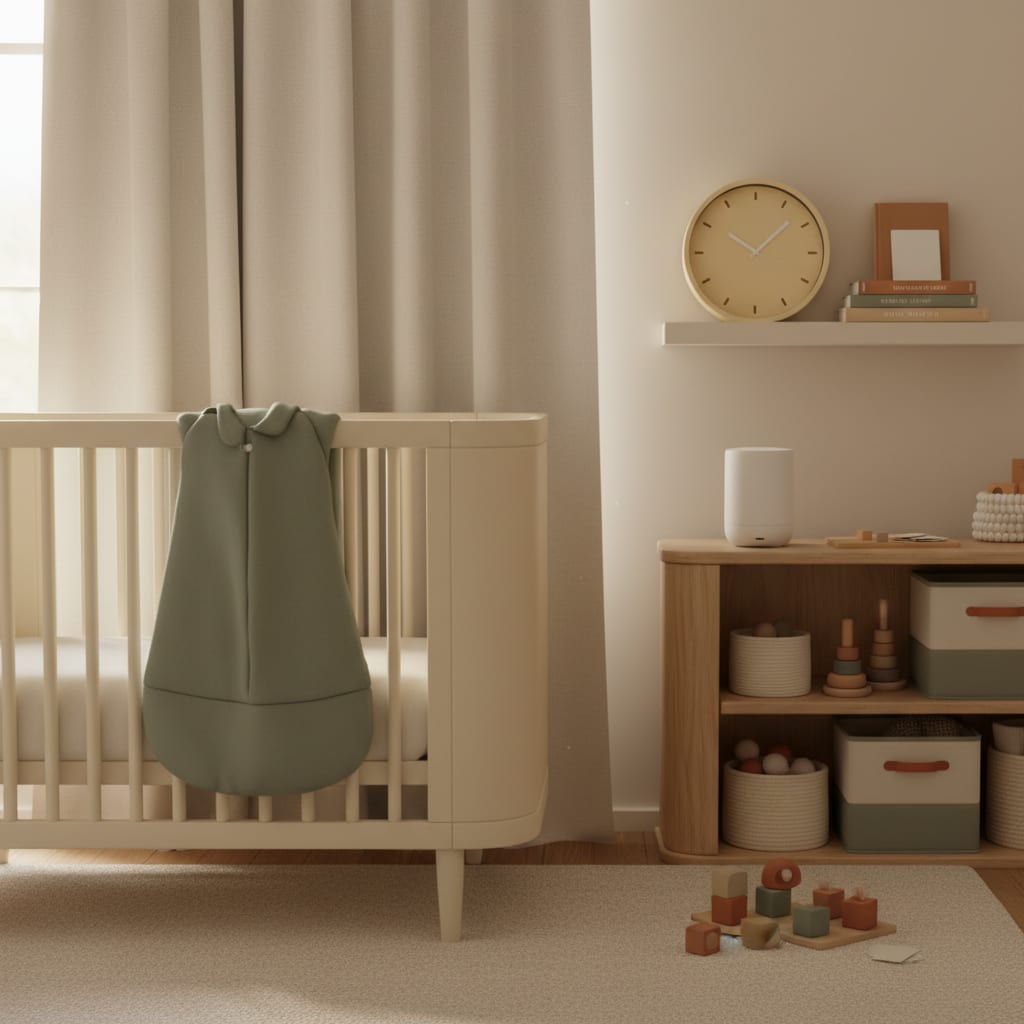
Light and noise. Summer sunrise arrives well before six in most of the country, and a merely dim room will not hold a child past first light. Blackout that’s actually black, plus steady sound (a Dohm) to cover the neighbor’s truck, resolves more early waking than any schedule change.
A habit that got built. If 5:50 reliably produces milk, a screen or the big bed, the wake-up is being rewarded — fixable, but with consistency rather than a timing tweak.
A fifth cause is temporary: illness, teeth, a leap or a travel week pull mornings earlier and then hand them back. Give those a fortnight before rebuilding your day around them. Clock changes do the same for a week — a blip, not a drift.

Building a home day that starts at 6am
Say the tests pass and your child is a genuine early riser. The mistake everyone makes next is keeping the day’s landmarks where the internet put them — nap at 12:30, dinner at 6, bed at 7:30 — then wondering why the morning feels four hours long. If the day starts two hours early, every anchor moves with it: the order stays, the clock slides. Here’s the five-block rhythm shifted for a six o’clock start.
- 6:00–7:30 — the slow morning, and it’s real. The gift nobody mentions: an unhurried breakfast, coffee that stays hot, a child at their most agreeable. Don’t spend it scrolling in the dark resenting it.
- 7:30–9:30 — the big block, earlier than everyone else’s. First at the park, at the store as it opens. Empty playgrounds are the 6am household’s compensation, and they’re worth a lot.
- 10:00 or 11:30 — the nap ramp, whichever your age needs. Two-nap children take the first absurdly early, and that’s correct rather than a failure. One-nap children often need lunch pulled to 11:00 so the wind-down doesn’t collide with an overtired 11:45.
- Mid-afternoon — the low-key block, and it’s longer. The hard part of a shifted day; it deserves planning, not improvisation.
- The runway, moved back to match. If your child needs eleven or twelve hours to reach 6am, bedtime is arithmetic, not tradition — 6:30 or 7:00 for many, which is legitimate, not eccentric.
One age note: very small babies run on wake windows rather than a clock, so the day floats and 6am matters less. From about eighteen months the shape above holds — and if you’re unsure the day’s total is right at all, how much sleep a two-year-old actually needs is the number to check against before you rearrange anything.
The two things that make a 6am day genuinely hard
Not the mornings — two other things, both solvable.
The afternoon arrives early and lasts forever. A day starting at six hits its low point around three. The pre-dinner survival plan still applies, just aimed ninety minutes earlier than its name suggests. Prep dinner during the nap so the worst hour needs nothing of you but presence.
The evening is short. Bedtime at 6:45 means the working partner may get twenty minutes with the kids. That deserves a real answer rather than sliding bedtime later and paying at 5:15am — a proper morning handover, a protected weekend block, or one agreed late night a week with a nap adjustment.
The reframe: a 6am household is not a broken 7am household. It’s a day with a different center of gravity — more morning, less evening, a quieter house by seven. Once we stopped calling ours a problem and built for it, the day got easier without the wake-up moving a minute.
When it is worth trying to move it
Three situations, and only these: the wake-up is in the 5s, the totals are short for your child’s age, or the trend creeps earlier week over week. Start with an earlier bedtime for a full week (yes, earlier), then nap timing and length, then the room’s light and sound — one variable at a time, held ten to fourteen days before judging.
If all three tests pass, leave it alone. Training a rested, cheerful, consistent 6am riser into a 7am riser mostly produces an overtired child who wakes at 5:40.
FAQ: 6am wake-ups
Is 6am too early for a baby or toddler to wake up?
Not on its own — for plenty of children 6am is a normal, healthy morning. What matters is total sleep across twenty-four hours, whether they’re still content ninety minutes after waking, and whether that time has been stable for weeks rather than sliding earlier.
What counts as early waking?
Most people use somewhere before 6am as the line, but the useful definition is behavioral: a wake-up that leaves your child under-slept and unraveling before mid-morning, whatever the clock says. A cheerful, rested 6am is not early waking; a miserable 6:40 might be.
Will a later bedtime stop a 6am wake-up?
Usually the opposite. Overtiredness makes children sleep lightly and surface earlier, so a later bedtime tends to produce earlier mornings. Troubleshooting a genuine drift starts with bedtime thirty minutes earlier for a week.
How do I structure a stay-at-home day that starts at 6am?
Keep the order of blocks and slide every anchor earlier: a slow 6:00–7:30 morning, the big outing at 7:30, the nap ramp before the usual lunch hour, a longer low-key afternoon, and a bedtime early enough to supply the sleep your child needs. Expect the low point around three, not five.
My child wakes at 6am but is exhausted by 8am — what’s wrong?
That points to a sleep deficit rather than an early body clock. Check total sleep first, then bedtime (too late is far more common than too early), then whether the last nap ends too late or runs long, then light and noise in the room.