Decluttering for Cash: Facebook Marketplace 101
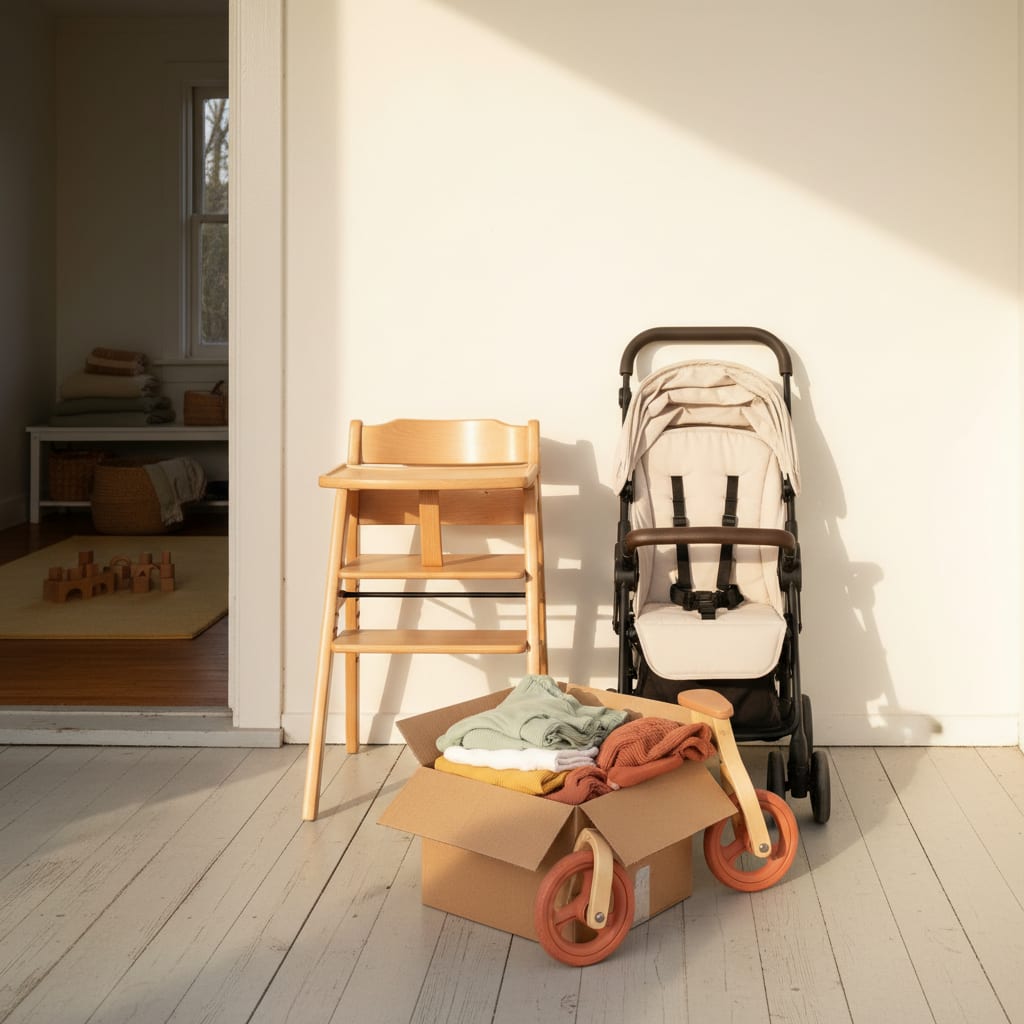
Selling the stuff you already own is the fastest money available to a one-income household, and Facebook Marketplace is where most of it moves — local pickup listings carry no selling fee, the buyers are already nearby, and baby and kid gear turns over faster there than anywhere else. The whole thing hinges on three unglamorous details: a first photo in daylight, a title people actually search, and a pickup arrangement that doesn’t require you to be present. Do those and a Saturday’s worth of clutter clears in a week. Skip them and you’ll spend a month answering “is this still available?”
Why this beats most side hustles for speed
There’s no ramp-up. No skills to build, no clients to find, no algorithm to please for six months. You already own the inventory, you already paid for it, and every dollar is money back rather than money earned — closer to a refund than a hustle.
It also solves a second problem. Small kids generate obsolete objects at a startling rate: the bouncer outgrown in eleven weeks, the bath seat, the tricycle, four sizes of winter boots. Those things take up your house and represent money. Clearing them buys back both, which is why this pairs so naturally with the buy-secondhand-first approach — you sell the outgrown thing to fund the next size, and the cycle mostly pays for itself.
What’s worth listing (and what to donate instead)
The rule: list it if a stranger would drive fifteen minutes for it.
Sells fast and well. Baby and toddler gear in good condition — strollers, carriers, high chairs, activity centers, wooden toys, ride-ons. Furniture of almost any kind. Tools, sporting goods, bikes. Anything seasonal, listed in its season. Brand-name kid gear especially: parents search by brand, and those searches convert.
Sells slowly. Adult clothing, books, small kitchen items, anything under about ten dollars. Individually they’re not worth the messages. Bundle them — “box of 18-24 month boys’ clothes, 30 pieces” moves in a day when the same clothes listed individually sit for a month.
Donate it. Anything with a stain, a missing part or a safety concern. Car seats and expired safety gear should never be resold — recalls and expiry dates exist for a reason, and this is one place where the money isn’t worth it. Drop-side cribs and recalled items likewise: check before listing, not after.
Start with the five biggest objects in the house rather than the most numerous. One stroller equals forty pieces of clothing in both effort and return.
The listing that actually sells
Four things, in order of importance.
The first photo. It’s the only one most people ever see, and it decides everything. Daylight, near a window or outdoors, item against a plain background, whole thing in frame, nothing else in the shot. No laundry pile in the corner, no dark garage. Wipe the item down first — five seconds of cleaning is worth more than any wording.
The title. Write what a buyer types, not what you’d call it. “Graco high chair” beats “baby feeding chair.” Include the brand, the item, and the size or age range if there is one. This is a search box, and vague titles simply don’t surface.
The price. Search Marketplace for your item first and look at what sold listings ask, then price slightly under the middle of the pack. On used kid gear, roughly a third of retail is a common landing spot for things in good shape, though condition and brand swing it a lot. Price a little above your floor so there’s room to accept an offer and still be happy.
The description. Short. Condition, any flaws stated plainly, dimensions if it’s furniture, whether you have the original box, and pickup area — “porch pickup near [your neighborhood].” Naming the flaw yourself prevents the haggle at the curb, which is the negotiation you actually want to avoid.
Handling buyers without losing your afternoon
Every Marketplace veteran arrives at the same set of rules, usually the hard way.
Answer fast and answer first — the first responder usually gets the sale, and a saved reply (“Yes, available! Porch pickup, address after you confirm a time”) turns twenty messages into twenty taps. Ignore anyone who wants to move the conversation to text before agreeing to anything, anyone offering to ship you extra money, and anyone asking for a code sent to your phone. Those are all the same scam wearing different clothes.
Take the first firm yes rather than holding out for the best offer. And expect no-shows, because there will be no-shows.
The fix for both problems is porch pickup: item on the porch, payment sent electronically before or on arrival, buyer collects at any point in a window you name. No appointment to keep, no doorbell during naptime, no small talk while a toddler climbs your leg. It’s the single change that turns Marketplace from an ordeal into a background process. For anything too valuable to leave out, meet at a public exchange spot instead — many police stations have a marked one — in daylight, and don’t invite strangers inside.
Fees, shipping and the money itself
Local pickup sales on Marketplace carry no selling fee: cash or an instant transfer between you and the buyer, nothing skimmed. That’s the version most families should stick to.
Listings sold with shipping through Facebook checkout do carry a selling fee, currently a percentage of the buyer’s total with a small minimum, and Meta publishes the current rate on its selling with shipping help page. Shipping is worth it for small, valuable, hard-to-find items where the local buyer pool is thin. It’s not worth it for a bulky stroller.
Whatever comes in, decide where it goes before it arrives. Money that lands in the checking account with no assignment is money that disappears into groceries. Sending it somewhere specific — the next size up, the sinking fund, the debt — is what makes this feel like progress rather than tidying. If you want a container for that, running a clear-out alongside a family no-spend challenge makes both stick better than either does alone.
Make it a rhythm, not a weekend
The all-at-once version fails. You spend a Saturday photographing thirty items, list them all at once, get buried in messages on Monday, and quit by Wednesday with half the pile still in the garage.
The version that works is small and repeating: list two things a week. Photograph them during whatever block you already use for admin, post them, and let the messages come in over the following days. Two a week is roughly a hundred items a year, which is more than most houses even contain, and it never becomes a project you have to schedule around.
Relist anything that hasn’t sold in two weeks with a new first photo and a lower price — old listings go stale in the feed and a fresh one gets shown again. If it doesn’t move after two relists, it was a donation all along, and the shelf space is worth more than the theoretical twenty dollars.
FAQ: selling on Facebook Marketplace
Does Facebook Marketplace charge fees to sell?
Local listings sold without shipping have no selling fee. Items sold with shipping through Facebook checkout are charged a percentage of the buyer’s total with a small minimum, so check Meta’s current published rate before listing anything you plan to ship.
What sells best on Facebook Marketplace?
Baby and toddler gear, furniture, tools, bikes and seasonal items in season. Brand-name kid equipment does especially well because parents search by brand. Low-value items sell far better bundled — a box of clothes in one size beats the same clothes listed individually.
How do I stay safe selling on Marketplace?
Use porch pickup with electronic payment for ordinary items, and meet at a public exchange location in daylight for anything valuable. Never invite buyers inside, never accept an overpayment or a request to move off-platform before agreeing terms, and never share a verification code with anyone.
How should I price used baby gear?
Check what comparable local listings ask, then price slightly below the middle. Roughly a third of retail is a common landing point for gear in good condition, adjusted up for in-demand brands and down for wear. Leave a small margin so you can accept an offer without regret.