Bedtime Drives: When the Car Is the Only Quiet Place
If the car has become the only place your child will fall asleep, you have not created a bad habit — you have found the one place in your life with no siblings, no screens, no doorbell and one unchanging sound. That is worth knowing rather than panicking about. Treat the drive as a bridge, not a system: use it for a week or two if you need to, and spend those two weeks rebuilding the same four conditions in the house. Two things need saying first, because they are not negotiable, and both are below.
Why the car works, in four parts
Strip the romance out of it and the drive is doing four specific things, none of which requires a car:
- One steady sound with no events in it. Road noise does not stop, start, laugh or shout. It is the same argument as a fan.
- Almost nothing to look at. A rear-facing seat at dusk offers a headrest and some passing light.
- Motion at a constant, low level. The bit you genuinely cannot replicate at home, and the smallest of the four.
- A parent who is not negotiating. You cannot be asked for water while you are driving. This one matters far more than anyone admits.
Three of those four are reproducible in a bedroom for nothing. That is the whole plan.
What the drive actually costs
On one income the numbers deserve saying out loud, because “just drive them round” is advice from people who are not tracking it. Price your own loop rather than trusting a figure: your car’s real mpg, the length of the circuit, seven nights a week, plus what the extra cold starts do to a car you hope to keep another four years.
The bigger cost is the one that does not show up on a receipt. An hour that used to be the tidy-up, the conversation, the sit-down — the block that makes tomorrow survivable — is now spent driving in the dark. If you are the parent at home all day, that hour is not spare — it was already the thing that stopped the late afternoon from swallowing the whole day.
And then there is the transfer, which is the part that decides whether the drive was worth anything at all.
The two safety lines
A car seat is not a sleep space. The federal Safe to Sleep campaign is explicit: “Car seats, strollers, and sitting devices are not recommended as baby’s regular sleep or nap space. If baby falls asleep in a sitting or carrying device, move them to their regular sleep space as soon as possible.” That is written about babies, and it is the reason the driveway option — leave them buckled in, bring the monitor inside, get an hour — is off the table for an infant. For an older toddler in a five-point harness the acute risk profile is different, but “asleep upright in a harness, unsupervised” is not a bed at any age.
Never leave a child alone in a parked car, awake or asleep. The AAP’s HealthyChildren guidance puts heatstroke as “the leading cause of non-crash, vehicle-related deaths in children under age 15,” notes a child’s body heats “3 to 5 times faster than an adult’s,” and that “in just 10 minutes, a car can heat up 20 degrees F” — with heatstroke possible “when the outside temperature is as low as 57 degrees F.” Cracking a window or parking in the shade “does little to change the inside temperature.” Their advice includes keeping the car locked when parked, because “one in 4 hot car deaths happen when a child mistakenly locks themselves inside.”
So: the drive ends in the house. Every time.
Find out what your house is doing at seven o’clock
The car is telling you something specific about your home at bedtime. Stand in the hallway one evening and listen the way a two-year-old does.
The usual culprits, in the order they turn up in real houses:
- An older sibling’s evening running over the top of a younger one’s. One living room, two incompatible bedtimes — that is a scheduling problem with a known fix, and it is the whole of staggering an older child’s noisy hour.
- A nap that ended too late. A child who slept until half past four is not going down at seven, and no amount of driving changes the arithmetic. This is where a late nap wrecking bedtime is worth reading before you change anything else.
- The bedtime hour being the busiest hour in the house — dinner clearing, a partner arriving home, the doorbell, a washing machine on its spin cycle through a shared wall.
- A room that is genuinely too bright, or too full. Both are cheap to fix.
Only one of those four is a sleep problem. The other three are logistics, which is good news — logistics you can move.
Rebuild the car in the bedroom, one condition at a time
Take the four parts and install them at home, in this order, one per night so you can tell which one worked:
Steady sound. A fan, an air purifier on low, a sound machine like the Yogasleep Dohm — anything that produces the same noise for eight hours without an app or a timer. It replaces road noise exactly.
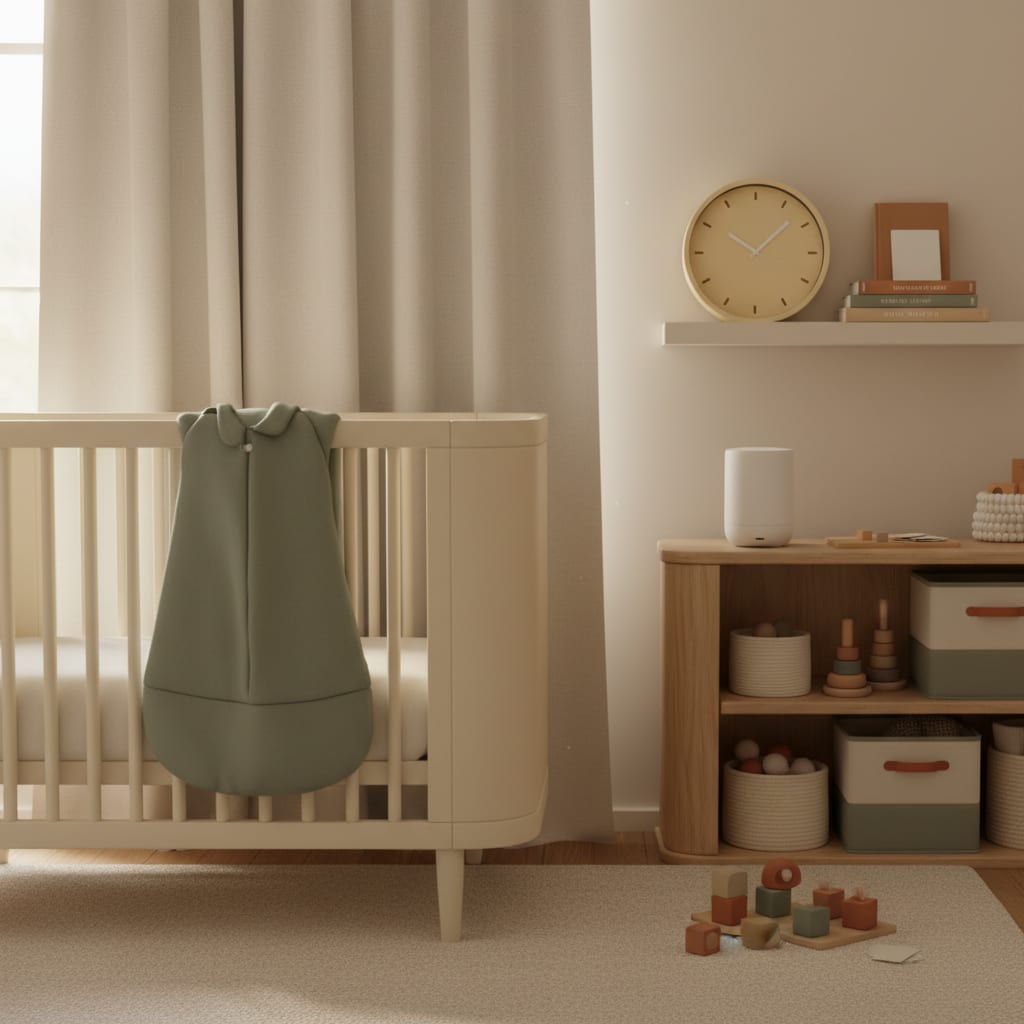
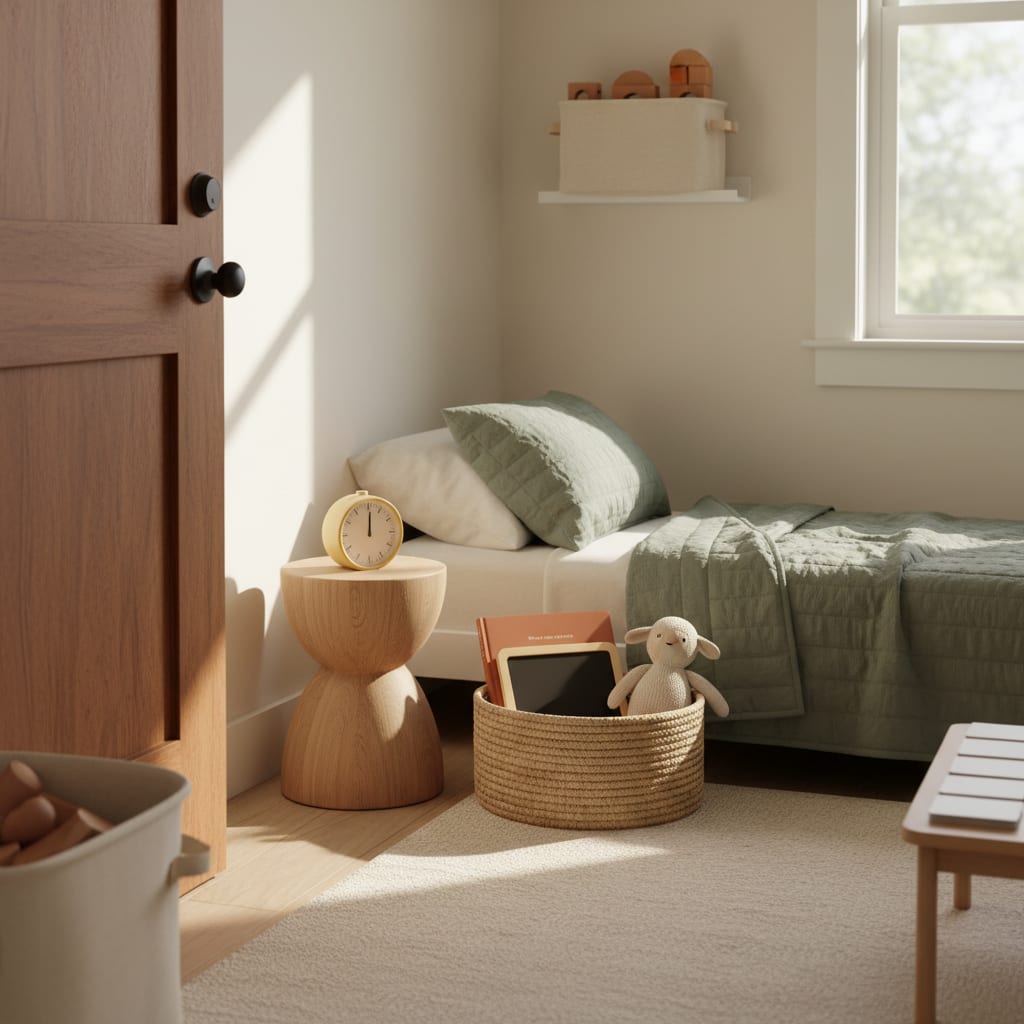
Nothing to look at. Dark, and boring. Clear the surfaces the child can see from lying down; a room stripped for sleep looks bare and works.
Motion, downgraded. You will not get road motion indoors, and mostly you do not need it once the other three are in place. What substitutes is rhythm — the same rocking or patting for the same short period, ended the same way each night rather than continued until sleep arrives.
A parent who is not negotiating. The hardest one, and the one the car was really providing. Decide before you go in what tonight’s answer is to the third request for water, and give that answer in the same six words every time. Predictability is the whole mechanism.
If your evening order has drifted into forty minutes of improvisation — which is exactly what happens once the drive becomes the routine — Betteroo’s step-by-step toddler bedtime sequence is a reasonable skeleton to rebuild from. Keep it short. A long routine is a negotiation with more rooms in it.

Weaning off the drive without a bad week
Do it by shortening, not by stopping. Cut the loop by five minutes every second night, and end the drive at the house rather than at sleep — pull in while the child is drowsy and awake, carry them in, finish in the bedroom with the same three steps you always use. You are moving the last two minutes of falling asleep from the car to the bed, and it is only those two minutes that have to change.
Expect two rough nights around the point where the drive gets short enough to stop working. That is the whole cost, and it is cheaper than another six months of gas.
If your days are built around naps that have started sliding, the reset is upstream of bedtime entirely — build the day around the nap first and re-test the evening a week later.
FAQ
Is it bad to drive my toddler to sleep? Not in itself, as a bridge. It becomes a problem when it is the only route, because it makes sleep depend on a car, a driver and fuel — three things that can all be unavailable on the same evening. Use it while you fix the room, then shorten it out.
Can I leave them asleep in the car seat on the driveway? No. Never leave a child alone in a parked car, and a car seat is not a sleep surface. Bring them in.
What if they wake the second I lift them out? Then the drive is buying you less than you think. Shorten the loop so you arrive home with a drowsy child rather than a deeply asleep one, and finish the job in the bedroom where the next waking can also be handled.
We live somewhere genuinely noisy — is a drive the honest answer? Usually the room needs steady sound rather than the child needing a car. A fan running all night masks a street far better than an hour of driving, because it is still there at two in the morning.