How to Get a Toddler and Baby to Nap at the Same Time
To get a toddler and a baby to nap at the same time, pick the baby’s most reliable nap that falls near midday and move the toddler’s nap toward it, not the other way round. Shift it about 15 minutes every few days, moving lunch first. Put the baby down first and the toddler straight after. Which naps can overlap depends on the stage each child is on, so start by matching those. Aim for a shared 45 to 90 minutes on most days, not a perfect two hours every day.
Which naps can actually overlap
The overlap you can build depends on how many naps the baby takes and whether the toddler still naps at all. Ages here are rough, because babies move through nap stages at their own pace.
| Baby’s stage | Toddler’s stage | Nap to aim for | What a good overlap looks like |
|---|---|---|---|
| Three or more short naps (young baby) | One midday nap | The baby’s middle nap | 30 to 45 minutes. Don’t push hard yet. |
| Two naps | One midday nap | The baby’s afternoon nap | 45 to 90 minutes, once the baby’s afternoon nap moves later |
| One nap | One nap | The same early-afternoon slot | The longest overlap you’ll get |
| Any | No nap | The baby’s longest nap | Quiet time for the toddler, not sleep |
The two-nap baby is the hardest row. Early in that stage, the baby’s afternoon nap often starts around the time the toddler’s nap is ending, so the two naps sit end to end instead of on top of each other. Our 3 to 2 nap transition post shows a typical two-nap day with the second nap starting around 2:00. A toddler who naps from 12:30 shares maybe half an hour of that. Move the toddler’s nap a little later and the shared stretch grows.
The easiest row is two children on one nap each. Most toddlers make the move to one nap somewhere between about 14 and 18 months. After that, both naps want the same early-afternoon slot. Betteroo’s guide for this age puts a typical two-year-old’s nap at around 12:30 to 1:00 pm. It also says most two-year-olds keep their nap all year.
Move the toddler, not the baby
When the naps are close but not touching, the toddler’s nap is the one to move. A baby’s wake windows are short, so pushing the baby 30 minutes is a big stretch on a small budget. The toddler’s single nap has more room either side, as long as it still ends early enough to protect bedtime.
So the baby’s nap stays where the baby’s wake windows by age put it, and that becomes the target. The toddler’s nap slides toward it.
One exception: if the baby’s best nap lands when your toddler can’t sleep, like 10:30 in the morning, don’t chase it. Wait for the baby to drop a nap; the overlap often appears on its own.
Shift the toddler’s nap 15 minutes at a time
Big jumps tend to produce a toddler who lies awake, or one who melts down before nap. Small steps work better.
- Find the gap. Note when each child falls asleep for a few normal days. Toddler at 12:30 and baby at 1:30 means an hour to close.
- Move lunch first. Lunch is the lever. Move it 15 minutes in the direction you want the nap to go.
- Move the nap 15 minutes. Keep the same wind-down, the same room and the same order of events.
- Hold for three or four days. Then take the next 15 minutes. An hour’s gap closes in about two weeks.
- Keep the morning wake-up steady. A late start pushes the whole day later and undoes the work.
- Watch the end of the nap. A later nap that runs past mid-afternoon eats into bedtime. Cap it rather than let the overlap cost you the evening.
The double put-down
Getting two children down within 15 minutes of each other is its own skill.
Set up both rooms before lunch. Shades down, white noise on, the toddler’s comfort item on the bed. A plain fan-style machine like the Yogasleep Dohm in each room helps cover the sounds of the other child going down.
Baby first, toddler second. The baby’s routine is shorter and their window is tighter. While you settle the baby, the toddler does a set job: choosing two books, lining up their shoes at the door, carrying the water cup to their room. Then it’s the toddler’s turn: two books, a song, lights out.
Expect it to take a few weeks. At first one child will be up before the other is down. That’s normal. Count the days the overlap happens, not the days it doesn’t.
When they share a room for naps
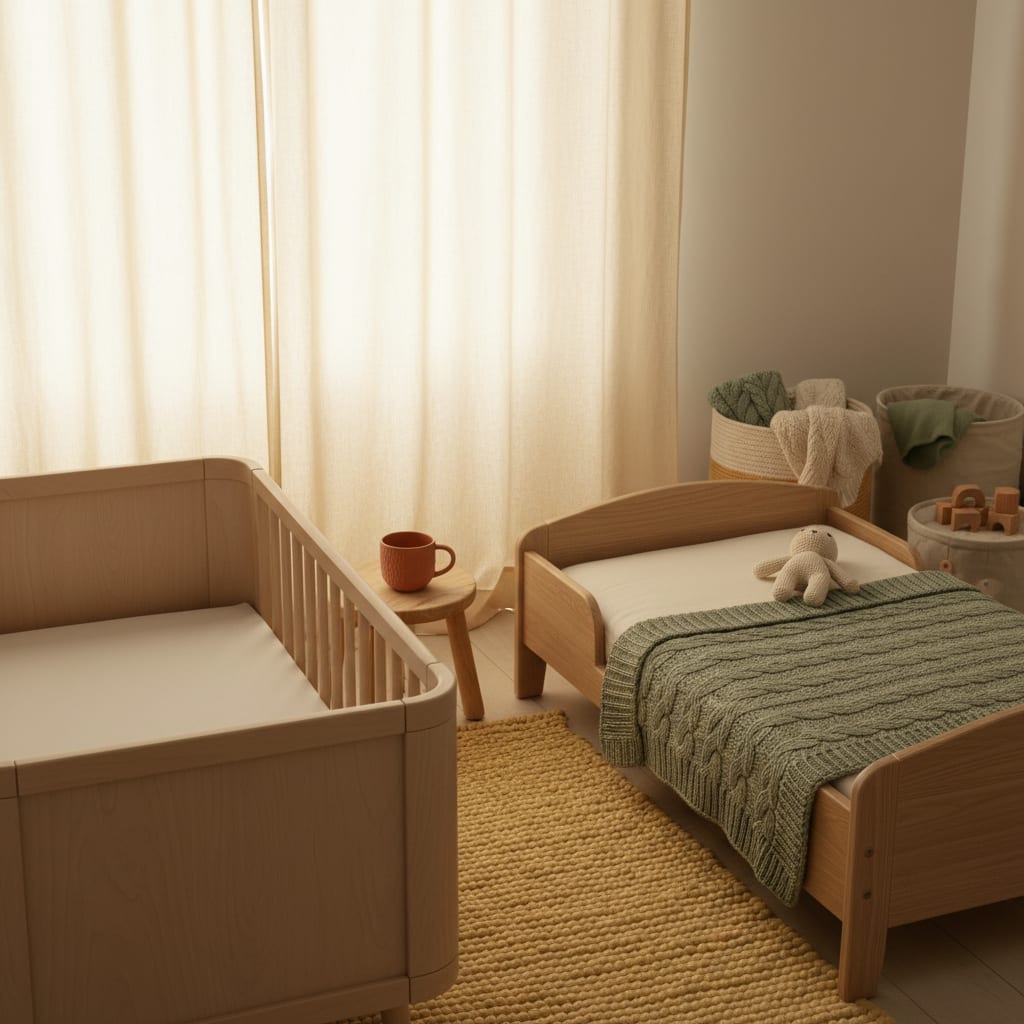
Many families have a toddler and baby in the same bedroom. Shared rooms can work at night but are harder at nap time, because a toddler who is still awake will chat, sing or climb out.
Two things help. First, give the baby a separate nap space while you build the overlap, such as a portable play yard in your room. It still follows the safe sleep basics. The NIH’s safe sleep environment guidance says a baby’s sleep area should be firm and flat with a fitted sheet only. That means no pillows, stuffed toys, bumpers, loose blankets or weighted products. Second, once naps are steady, try moving the baby back into the shared room. Put the toddler down a little after the baby so the baby is already asleep when the toddler comes in.
Betteroo’s advice on room sharing with siblings applies the same idea at night: move the baby in with the older sibling once nights are steady, and put the older child to bed later for the first week.
When it won’t line up
Some days the overlap just won’t happen, and some stages make it impossible for a while.
- The baby takes 30-minute naps. You can’t build a long overlap on a short nap. Keep the toddler’s nap where it is and work on the baby’s nap length first.
- The toddler takes ages to fall asleep. If your toddler regularly lies awake for half an hour or more, the nap may be too early for them, or they may be starting to drop it. Try 15 minutes later before you try anything else.
- The toddler has dropped their nap. Keep the slot and change what happens in it. Run quiet time instead of the nap in their room while the baby sleeps. A visual timer like the Time Timer shows them how long is left without you going in to tell them.
- One wakes the other. Move the baby’s sleep space further away or stagger the put-down by 10 more minutes.
- Outing days. A car doze or a late nap throws it off. Treat those days as off and start again tomorrow.
Four overlap days out of seven is a good result. The toddler and baby schedule shows where this midday break sits in the rest of a two-kid day.
 Make the baby's nap something you can aim at
Betteroo looks at your baby's age, naps and wake-up time and suggests a daily rhythm, so you know where the afternoon nap is likely to land before you start moving the toddler's.
Take the 2-minute sleep quiz →
FAQ: toddler and baby naps at the same time
Should I move the baby’s nap or the toddler’s?
Usually the toddler’s. A baby’s wake windows are short, while a toddler on one nap has room to move in 15-minute steps, as long as the nap still ends in time for bedtime.
How long does it take to sync a toddler’s and baby’s naps?
Plan on a few weeks if the naps start within an hour of each other: about two weeks of 15-minute steps, then more practice at the double put-down.
Can a toddler and baby nap in the same room?
They can, but it’s easier to build the overlap with the baby napping elsewhere first, in a firm, flat, empty sleep space. Once naps are steady, move them back together, toddler down after the baby.
What if my toddler won’t nap at the same time as the baby?
Keep the time and change the expectation. Quiet time in their room, with books and a timer, still gives you a stretch where both children are settled. That counts as the overlap.