A Screen-Free Story Break for Busy Family Days
This is a paid feature with Ema Hare. The creator supplied review access to the recordings. One Mom’s Guide chose the activities and questions below.
Turn a short audio story into a screen-free family activity with a shared map, a conversation prompt and ideas inspired by Emilyie’s Adventures - Set One.
In this post
By the time everyone gets home, a child can have had quite enough of answering questions about their day. A story gives you something else to talk about. You can start the recording, set the screen aside and share a few minutes with a character who has a decision to make.
Emilyie’s Adventures - Set One is a digital collection of ten narrated stories. The creator describes it as English-language audio for ages 6–9, priced at $9.99 and running about two to two and a half hours in total. The creator says each story has a short outro of about 30–45 seconds to ease the transition to the next track. She expects the collection to reach Spotify and other platforms through INaudio around December 9. For this feature we reviewed the narration in the full opening story and sampled the beginnings of two others. These ideas are for families to try at home.
Start with Leo’s unfinished map
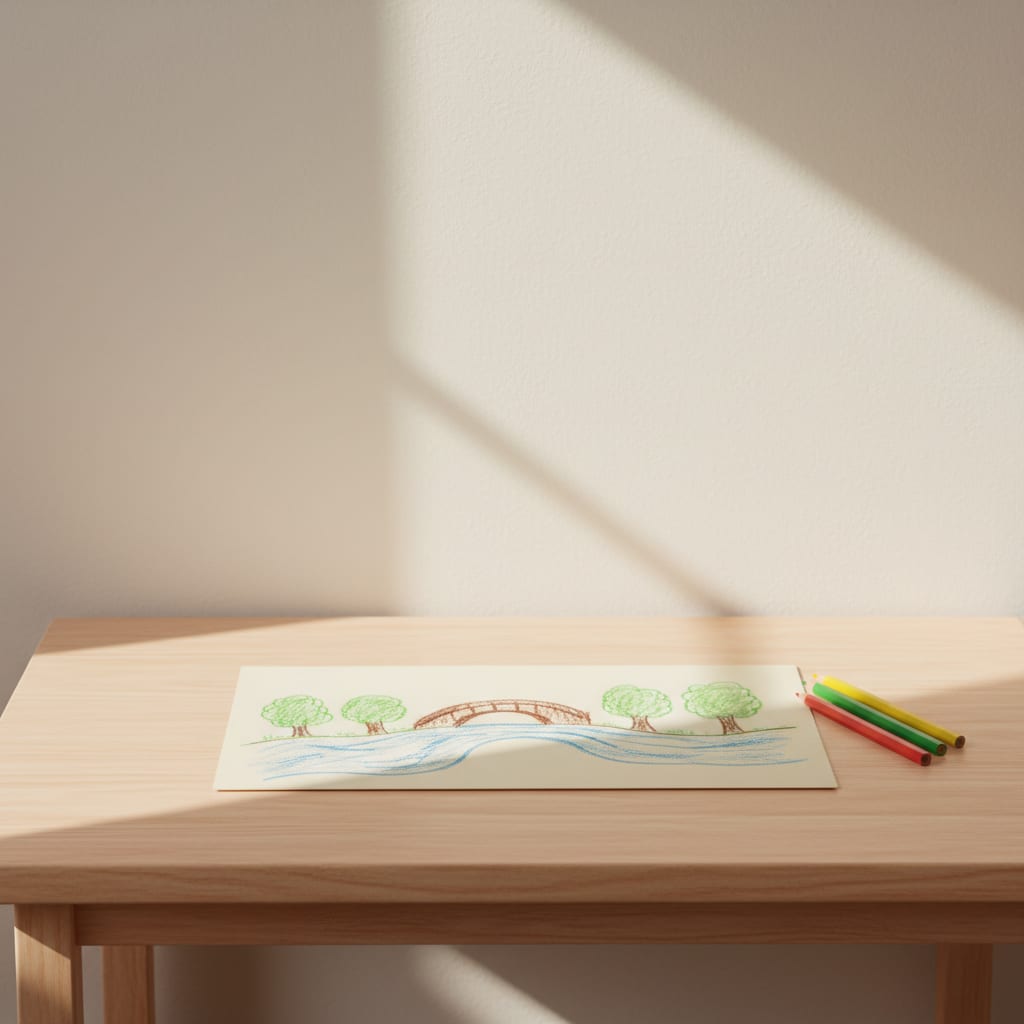
The opening story, “The Dreamweaver’s Gift,” runs a little under fourteen minutes. A child named Leo imagines what might be behind a tiny blue door and finds a workshop. A paper bird asks for help making a map. Leo starts with a river and adds places one at a time. Later, he leaves a corner for a friend, who draws a bridge.
That blank corner makes a good invitation after the story. Give your child a scrap of paper, draw one landmark together and take turns adding something. “Where would your bridge lead?” is enough to get going. A child who would rather talk can describe the next place and let the grown-up draw. You can also leave the paper on the table and come back to it another day.
Choose a story by its opening
In “The Meadow of Forgotten Friends,” a trail leads to a gate and a meadow full of surprising details. For a child who likes imagining places, you could pause at the gate and ask what they think grows there. “The House of Tomorrow’s Windows” starts with a house whose windows show things that might happen the next day. Outside is a girl who has recently moved. If your family has a change coming up, the windows give you an opening to ask, “What would you like to see tomorrow?” It’s fine to let the story carry on if nobody feels like answering.
Fit the story to the time you have
If you have fifteen minutes between getting home and starting dinner, the first story fits with a little room to spare. On a shorter afternoon, you could stop at the blue door and save the workshop for the next day. Telling another family member what Leo found is its own way back into the story. And if a child is happily absorbed when the recording ends, the map and the questions can wait.